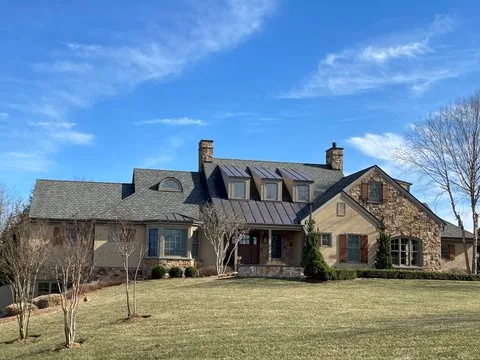
Fiberglass Asphalt Shingles in Northern Virginia, DC & Maryland
GAF Timberline HDZ, Owens Corning TruDefinition Duration, and CertainTeed Landmark — installed by a GAF Master Elite and Owens Corning Preferred contractor.
Every asphalt shingle made in the United States today uses a fiberglass mat as its structural base. 'Fiberglass shingles' is therefore the technical name for the entire asphalt shingle category — both the dimensional / architectural shingles that dominate today's market and the older three-tab shingles you still see on 1990s-built homes. King's Roofing installs all three major brands (GAF, Owens Corning, CertainTeed) and stocks the most common DC-metro colors for fast repair color-matching.
How Fiberglass Shingles Are Built
The build sequence from bottom to top: fiberglass mat (structural backbone), asphalt coating (waterproofing layer), ceramic-coated mineral granules (UV protection + color), polymer modifier on premium products (impact resistance), and a sealant strip (wind-resistance bonding). The mat is what makes a fiberglass shingle dimensionally stable through 30+ years of freeze-thaw cycling.
Architectural (dimensional) shingles add a second laminated layer on the lower portion of the shingle — creating the shadow lines and varied texture that distinguish them from flat three-tab shingles. The laminated layer also doubles thickness in the high-wear zones, which is why architectural shingles last 10–15 years longer than three-tab in this climate.
Brand Comparison: GAF vs Owens Corning vs CertainTeed
GAF Timberline HDZ: largest market share in the U.S., StainGuard Plus algae warranty (15 years), LayerLock technology for wind warranty up to 130 mph with the StrikeZone nailing area. Best for: homeowners who want the longest wind warranty and broadest contractor familiarity.
Owens Corning TruDefinition Duration: SureNail technology adds a fabric reinforcement strip in the nail zone — eliminates the #1 cause of shingle blow-off (nail pull-through). 130 mph wind warranty. Streak-Guard algae resistance. Best for: hail-and-wind-prone exposures.
CertainTeed Landmark: longest brand history (CertainTeed has been making shingles for 100+ years). Largest color depth — many homeowners find CertainTeed's colors look more 'natural' against historic brick and stone. 130 mph wind warranty with StreakFighter algae warranty. Best for: aesthetic-driven projects, historic homes.
Three-Tab vs Architectural: Why We Don't Install Three-Tab
Three-tab shingles were the residential standard from the 1960s through the late 1990s. They're flat (no shadow line), thinner, lighter, and warranted for 20–25 years versus 30–50 for architectural. They cost about 20% less per square installed.
We don't install three-tab on any project unless a homeowner specifically requests it (which is rare, typically only for matching a historic addition to an existing three-tab roof). On a cost-per-year basis, architectural always wins — the small upfront savings on three-tab is dwarfed by the 10–15 fewer years of service life and meaningfully worse wind performance.
Color Selection in the DC Metro
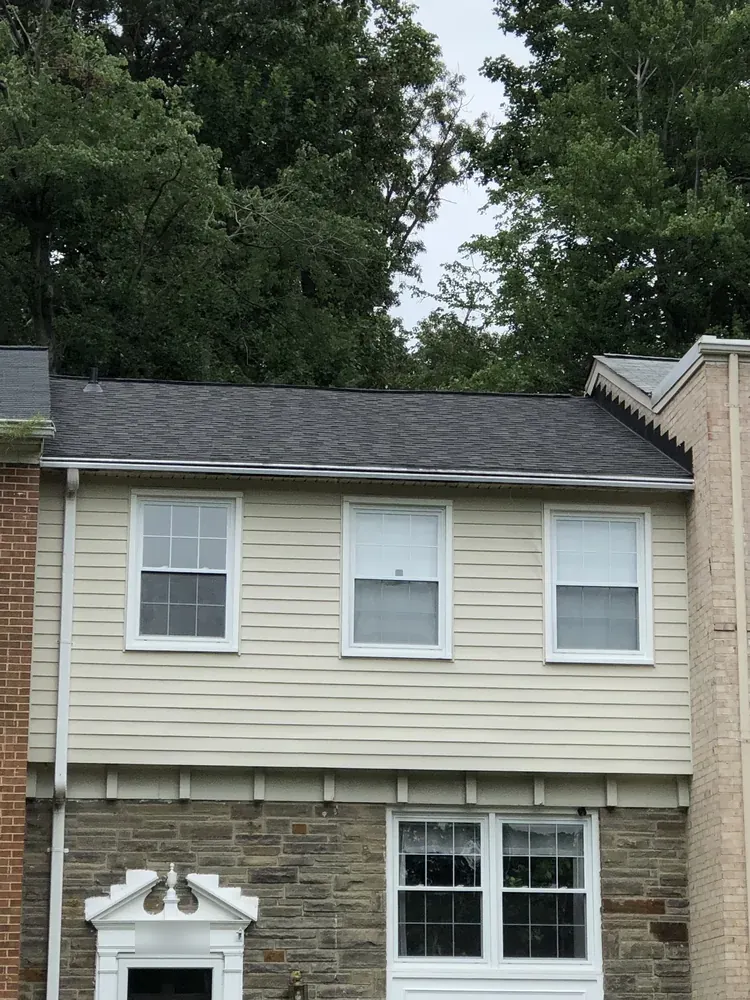
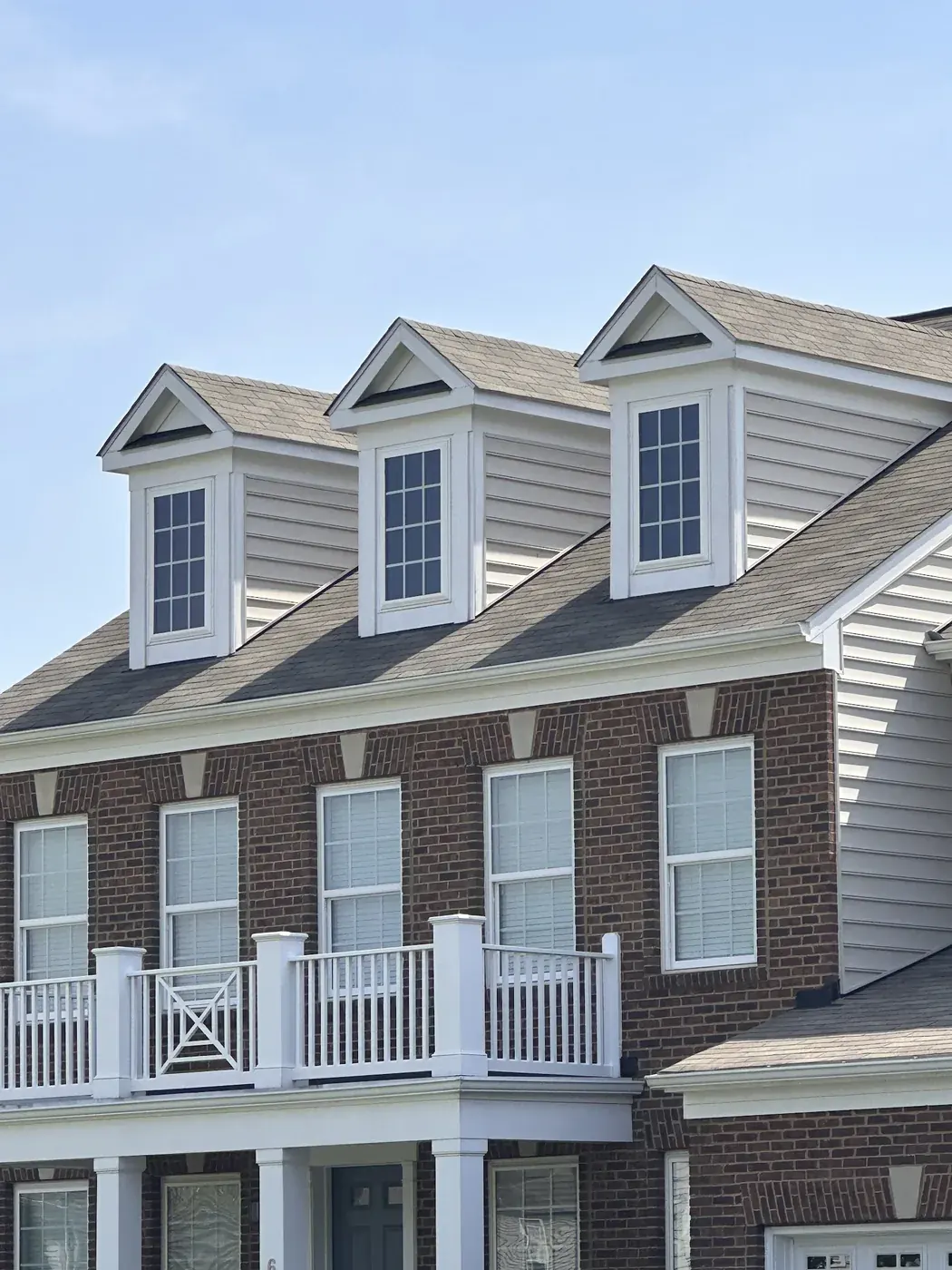
Most-popular DC-metro architectural shingle colors, in rough order of frequency: Charcoal (versatile dark grey, works with virtually any siding), Weathered Wood (warm brown-grey, common on Colonials), Driftwood (medium grey-brown), Hickory (warm brown), Pewter Grey (cooler grey), Hunter Green (popular on cedar-sided homes), Slate (deep blue-grey, common on stone-front facades).
We bring full-size sample shingles to every estimate visit so you can hold candidate colors against your home's brick, stone, siding, and trim before committing. Colors look dramatically different on a sample board than on a hot, sun-lit roof — in-context comparison matters.
Class 4 Impact-Rated Options
All three major brands offer Class 4 impact-rated versions of their architectural shingles (GAF Timberline HDZ AS, Owens Corning Duration Storm, CertainTeed Landmark Solaris IR). The polymer-modified asphalt resists hail strikes that would crack standard shingles.
Upcharge runs 10–18% over standard architectural. Most homeowners insurance carriers in Virginia, DC, and Maryland offer 5–15% premium discounts on policies with Class 4 roofs. In hail-prone DC-metro neighborhoods (most of the metro), the upgrade typically pays for itself in 4–7 years through reduced premiums alone — plus dramatically lower repair likelihood after future hail events.