Flashing at walls and chimneys
Lifted or corroded flashing is rebuilt or replaced. Sealant smeared over a failed joint is a short-term measure, and a scope should say so when that is all it contains.
King's Roofing Company repairs roof leaks, failed flashing, cracked vent boots, storm damage and flat roof seams. A ceiling stain only shows where water came out, so the work starts with tracing where it got in.
Roof leak repair
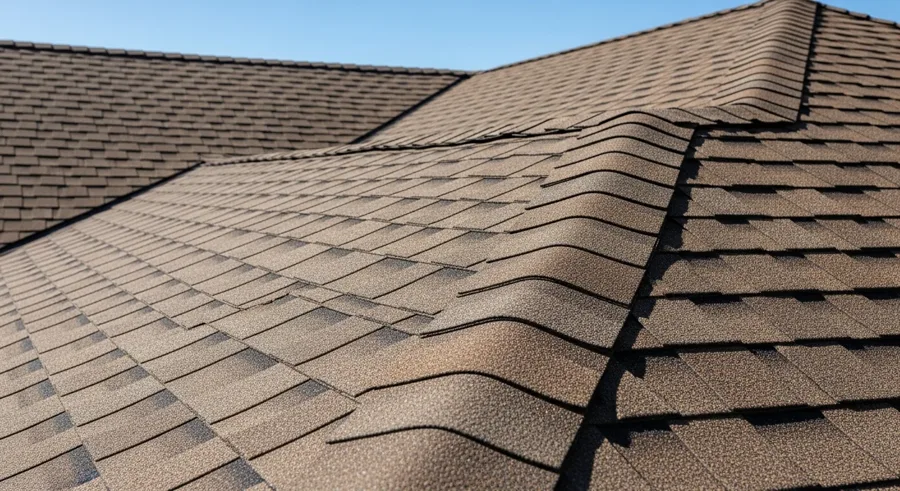
A shingle roof sheds water because each layer overlaps the one below it. Leaks begin where that pattern is interrupted: beside a chimney, along a wall, around a pipe, in a valley, or under a shingle that has lifted. The open field of shingles is rarely the problem until it is badly worn.
Water also travels. It can run along a rafter or on top of the underlayment for several feet before it soaks through a ceiling, so the stain in the bedroom may sit well downslope of the opening. A patch placed over the stain usually fails again in the next hard rain.
The usual trace goes like this: note the highest stain, work upslope to the nearest penetration, seam or joint, check the attic side for dark or damp decking, and only then look at the roof surface. If the cause is still unclear, a controlled water test on one area at a time narrows it down.
Symptoms
A guide for the phone call, not a diagnosis from a photo.
| What you notice | Common source to check |
|---|---|
| Stain beside a chimney | Step and counter flashing, or the joint between flashing and masonry |
| Drip near a bathroom fan or plumbing stack | A cracked rubber vent boot or a loose exhaust cap |
| Shingle pieces in the yard | Wind-lifted or torn tabs and the sealed strip that should have held them |
| Leak only in wind-driven rain | Roof-to-wall joints, gable edges and exposed fasteners |
| Stain below a valley | Worn or badly lapped valley material where two slopes meet |
| Dark spot under a skylight | Skylight flashing or the curb seal, before the glass itself |
| Puddle that stays on a flat section | Seams, drain area or a low spot holding water |
Condensation, plumbing leaks and overflowing gutters leave the same marks indoors, so the attic and the exterior both get checked before anyone commits to a roof repair.
Repairs
Lifted or corroded flashing is rebuilt or replaced. Sealant smeared over a failed joint is a short-term measure, and a scope should say so when that is all it contains.
Rubber collars around plumbing stacks crack in the sun well before the shingles wear out. Replacing one is a small job when it is caught early.
Valleys carry the most water and ridges take the most wind. Both are checked for lifted, cracked or poorly fastened pieces.
Damaged pieces are replaced and nearby courses are checked so the new shingle laps correctly. Weathered roofs rarely allow an exact color match.
Most skylight leaks come from the flashing or curb around the unit. The repair addresses the surround before anyone talks about replacing the skylight.
Open seams, failed flashing at a parapet and standing water on low-slope roofs are handled differently from shingles. See flat roof repair for the detail.
Repair or replace
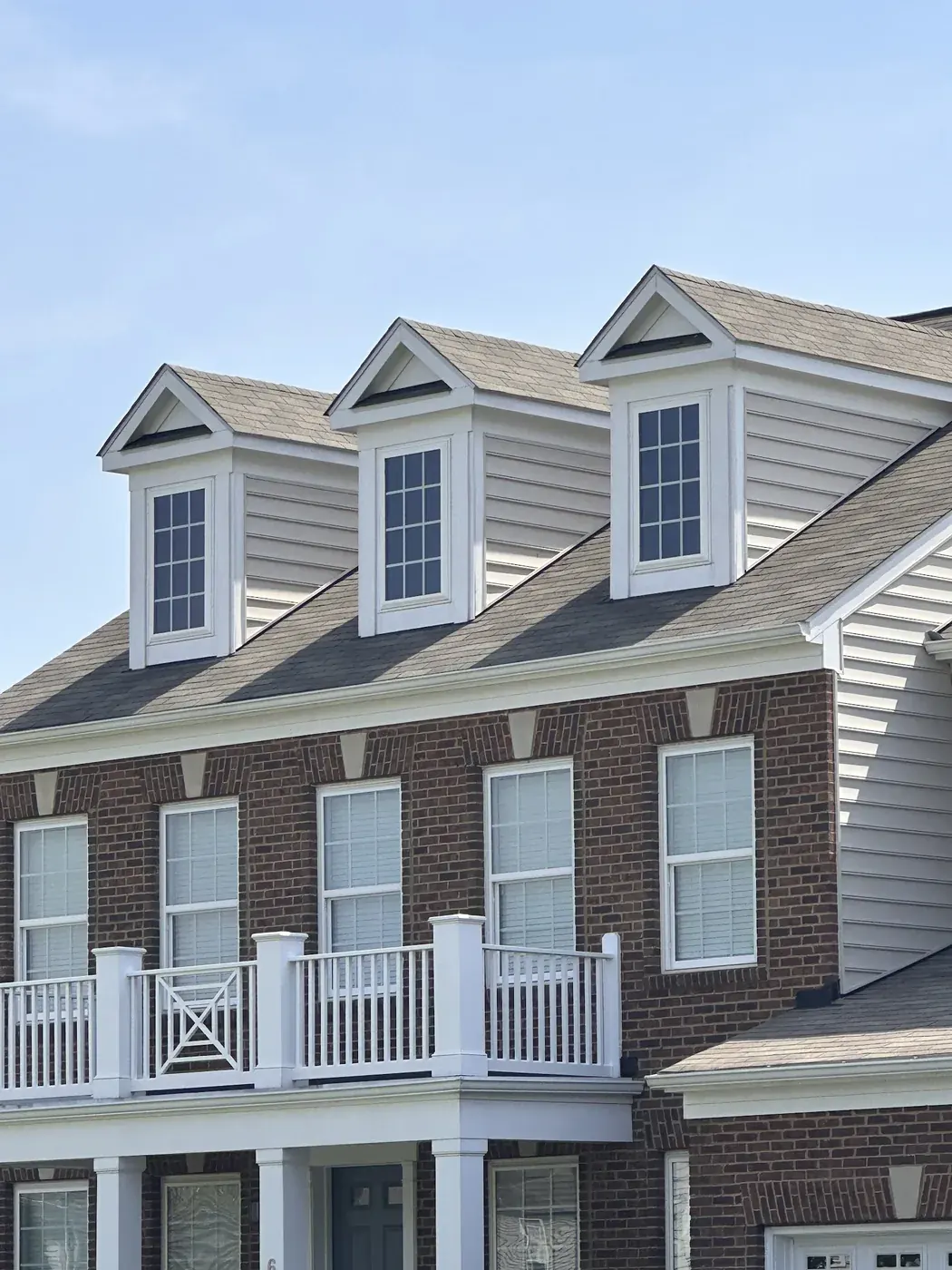
Dormers, valleys and wall joints are where repairs concentrate, and a repair is a sound choice when the damage is local and the shingles around it are still flexible and sealed. The table below shows how the main factors usually point.
No single number decides it. Ask what the roof will look like after the repair, not only what the repair costs. If the answer points to a full job, read about roof replacement.
| Factor | Repair usually makes sense | Consider replacement |
|---|---|---|
| Where the damage is | One flashing run, one boot, a few lifted tabs | Leaks in several unrelated places |
| Shingle condition | Flexible, sealed, holding granules | Brittle, curled, or large areas of bare mat |
| Repair history | First or second repair on the roof | Repairs keep stacking up on the same slope |
| Decking | Dry and solid, or a small section is soft | Soft or stained in many places |
| Matching | A near match is acceptable | Mismatch would be obvious and matters to you |
| Plans for the house | Staying put, or selling soon with a sound roof | A buyer or lender will want the roof dealt with |
Active leak
Stay off the roof. Wet shingles are slippery and a roof that is already leaking may have weak decking. Look from the ground and photograph the ceiling and any visible damage. Keep clear of sagging drywall and wet light fixtures.
Tarping and permanent repair are different scopes. Ask which one is being proposed and what happens after a tarp goes on.
Storm damage
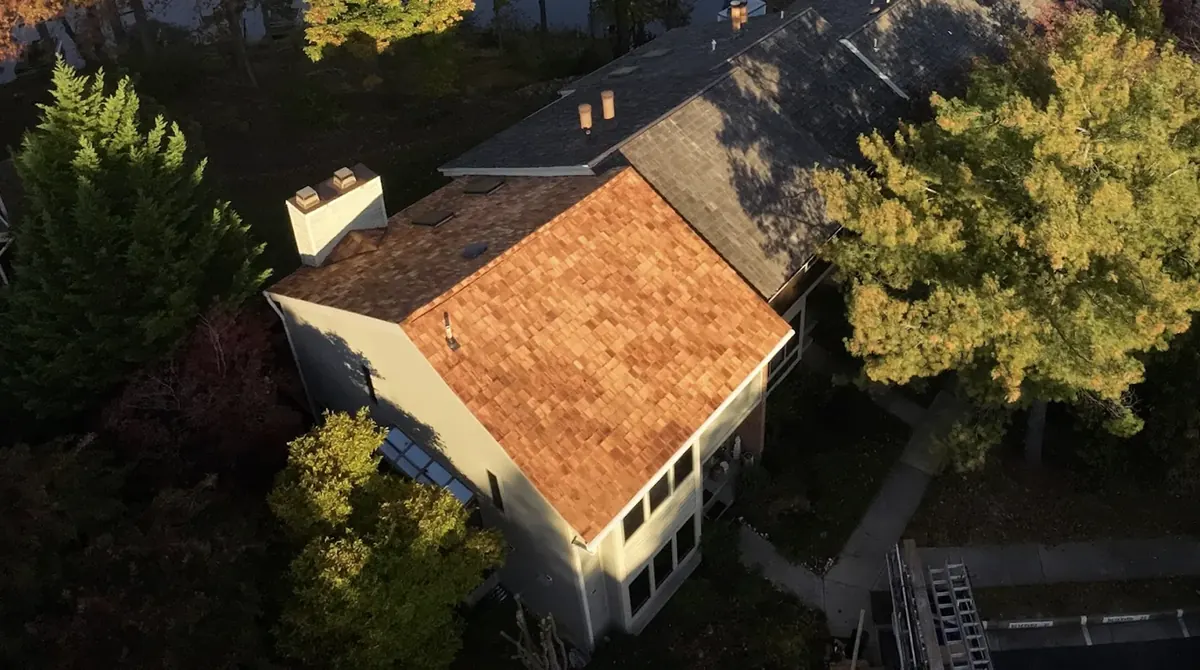
Creased or missing shingles, lifted ridge caps, dented metal, debris in gutters and impact marks from limbs. Some damage shows only in the attic as daylight or damp insulation.
Photograph the roof from the ground and the damage indoors before anything is moved. Read the storm damage repair guide. For coverage questions, see roofing insurance.
Maintenance
Small problems on a roof are cheap to deal with and expensive to ignore. A check is a look at the parts that fail first.
Chimney, wall and skylight joints are checked for gaps, lifted metal and sealant that has cracked or pulled away.
Plumbing boots, exhaust caps and vent covers are checked for cracked rubber, loose fasteners and rust.
Lifted tabs, creasing, granule loss, curling and exposed nail heads. Moss and debris in valleys that hold water are noted.
Clogged gutters let water back up under the first course of shingles, and downspouts that dump against a wall cause problems of their own.
Dark decking, damp insulation, daylight at the ridge and signs of condensation tell more than the surface does.
Look after strong wind, a fallen limb or a heavy freeze, and before listing a house. No fixed interval suits every roof, so ask on the phone call.
A visit is arranged after the phone consultation and ends with a plain description of what was seen. Findings that need work are put in a written scope, and anything that can wait is said to be able to wait.
How a repair runs
A free 15-minute call to describe where water shows, when it started and what has been tried.
The roof and attic are looked over at a time you choose, and what cannot be seen is noted.
The area, the parts and materials, what is excluded, and how hidden damage would be priced and approved.
Done to the written scope, with the work area protected and debris removed.
A plain description of what changed and the condition of the roof around it.
Permits
Fairfax County lists replacing roof shingles as work that does not need a building permit. It lists roof repairs and chimney repairs under work that does, and replacing less than 256 square feet of roof plywood is exempt unless the roof must be fire rated, as on townhomes.
The building official decides for your scope, so confirm with Fairfax County Land Development Services at 703-222-0801. The City of Fairfax has its own office, Code Administration, at 703-385-7830, so the right call depends on which side of the line the address sits. Other jurisdictions have their own rules; see service areas.
Materials and methods
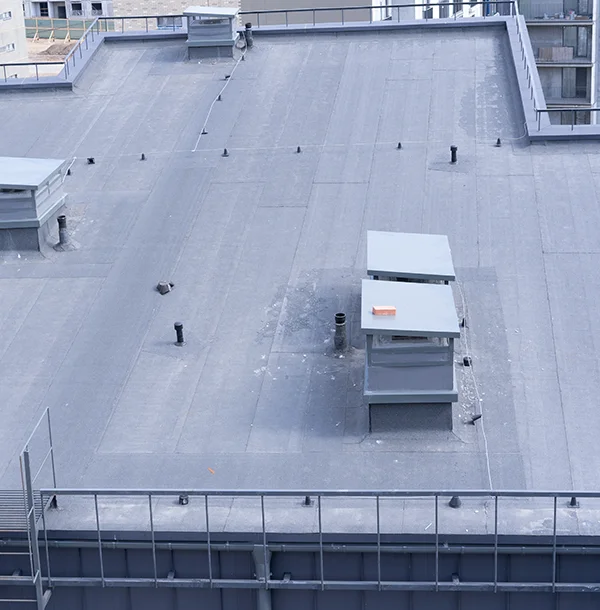
Materials follow the roof. Shingle roofs take matching shingles, new flashing metal, replacement vent boots and sealant used as a supplement, not a cure. Low-slope roofs take membrane patches, seam work and flashing rebuilt to the parapet. Read the roofing materials comparison if a change of covering is on the table, or see flat roof work.
Local pages cover Fairfax and Vienna, with more under all service areas.
Reviews
5.0 on Google from 60 reviews.
FAQ
They start at the highest stain and work upslope, checking penetrations, flashing and valleys, then look at the underside of the decking in the attic. If the source is still unclear, water is run over one area at a time until the leak shows itself.
It depends on the extent of the damage, how many times the roof has been repaired, the condition of the shingles and the decking, and what you plan for the house. The table above lays out how each factor tends to point.
Contain it with a bucket, protect belongings, photograph the damage and stay off the roof. Then call. Arrival depends on weather, access and the schedule, and no fixed time is promised.
Sudden damage such as wind or a fallen limb may be covered, while wear and age usually are not. Your policy and your insurer decide. See roofing insurance for a neutral overview.
Some can and some should wait. Sealants and membranes have temperature limits, and wet shingles are unsafe to work on. The decision is made on the day, based on conditions.
Sometimes close, rarely identical. Sun fades shingles and product lines change, so the nearest available product is chosen and a visible difference is mentioned up front.
Climbing a wet roof is the real danger, and a coating over a failed joint usually hides the symptom for a season. Photograph the damage from the ground and let a roofer find the entry point.
Fix the roof first and let the wet materials dry and be checked. Closing up a damp ceiling can trap moisture.
Talk through the next step
Have the address, the room where water shows, and when it started. Ground-level photos of the ceiling and the roof help, and nobody needs to climb up to take them.
9220 Topaz St, Fairfax, VA 22031
Mon to Fri 7 AM to 8:30 PM, Sat 7 AM to 8 PM, closed Sunday