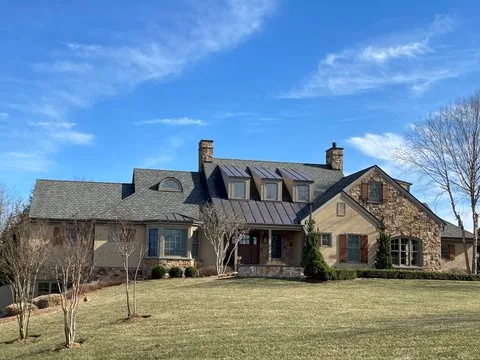
Metal Roofing in Washington, DC
Standing seam metal roofing for Washington, DC homes — 50+ year lifespan, Class 4 impact resistance, and Kynar 500-coated Galvalume or copper panels.
Why Metal Roofing in Washington, DC?
Standing seam metal roofing is the premium roofing upgrade for Washington, DC homeowners who want a permanent, no-maintenance solution. With a 50+ year lifespan, Class 4 impact resistance, and virtually no maintenance requirement, metal pays for its higher upfront cost by eliminating 2–3 future replacement cycles. Georgetown copper standing seam tradition; Federal-era front facades; Capitol Hill Victorian homes; HPRB-approved metal in historic districts; $18,000–$35,000 for typical DC row house full front-slope conversion.
The DC metro's weather is hard on roofing materials. Summer hail events from June through September regularly produce quarter-sized to golf-ball-sized hailstones. Wind gusts from thunderstorms and nor'easters exceed 60 mph multiple times each year. Standing seam metal — with its concealed fasteners, interlocking panel seams, and Class 4 impact rating — outperforms asphalt shingles in every one of these conditions. There are no exposed fasteners to work loose in wind and no granules to be knocked off by hail.
Standing Seam Metal: How It Works
Standing seam metal roofing is defined by its vertical panels with raised ribs (seams) that interlock with adjacent panels. Fasteners are completely concealed inside the seam — you never see a screw head on the finished roof. Panels run from ridge to eave in a single unbroken length, eliminating horizontal joints that could be leak points.
The most common residential material in the DC metro is Galvalume steel — a zinc-aluminum alloy coating over cold-rolled steel that provides outstanding corrosion resistance. Galvalume panels are typically factory-finished with a Kynar 500 PVDF coating, which carries a 40-year fade warranty and maintains color through NoVA and Maryland summers. For premium estate applications, aluminum panels offer lighter weight (important for older framing) and superior corrosion resistance. Copper and zinc panels are appropriate for historic homes and accent sections.
King's Roofing is a GAF Master Elite certified contractor, an Owens Corning Preferred Contractor, and carries an A+ BBB rating. We provide a 10-year workmanship warranty on all metal roof installations plus the manufacturer's 40-year Kynar paint and structural warranty.
Metal Roofing in Washington DC's Urban Environment
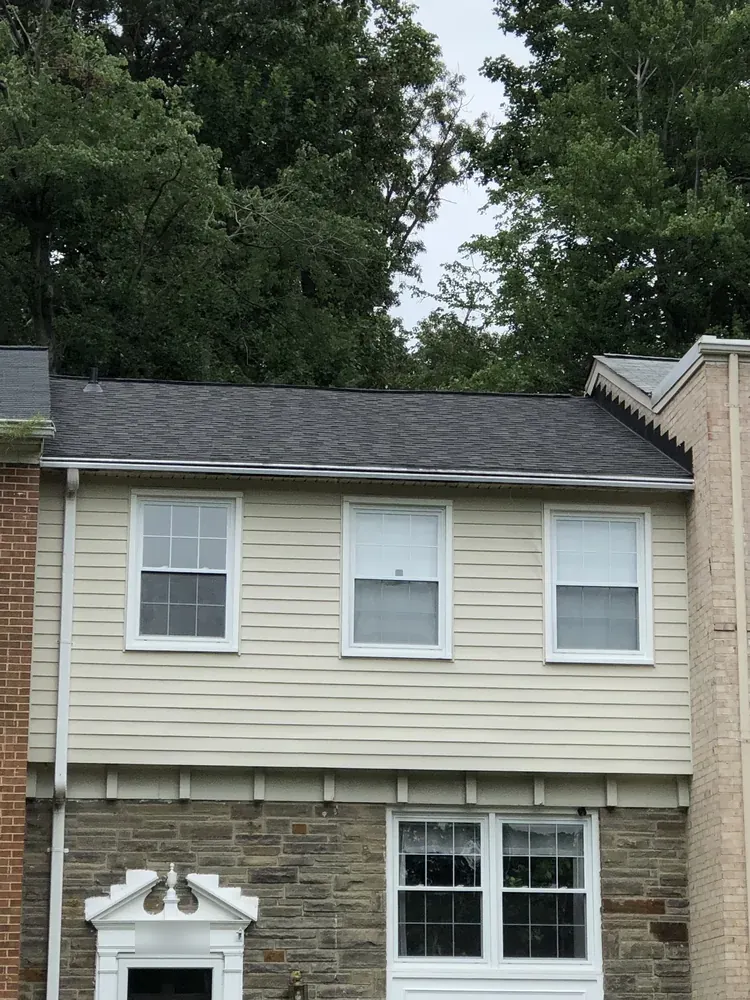
Washington DC's architectural heritage creates both opportunities and constraints for metal roofing. Georgetown's pre-Civil War Federal and Federal Revival homes have a long tradition of copper standing seam — copper was the historically appropriate material for the era and remains the gold standard for historic DC properties. Capitol Hill's Victorian row houses also have a tradition of metal cornices and partial-slope metal sections at the front.
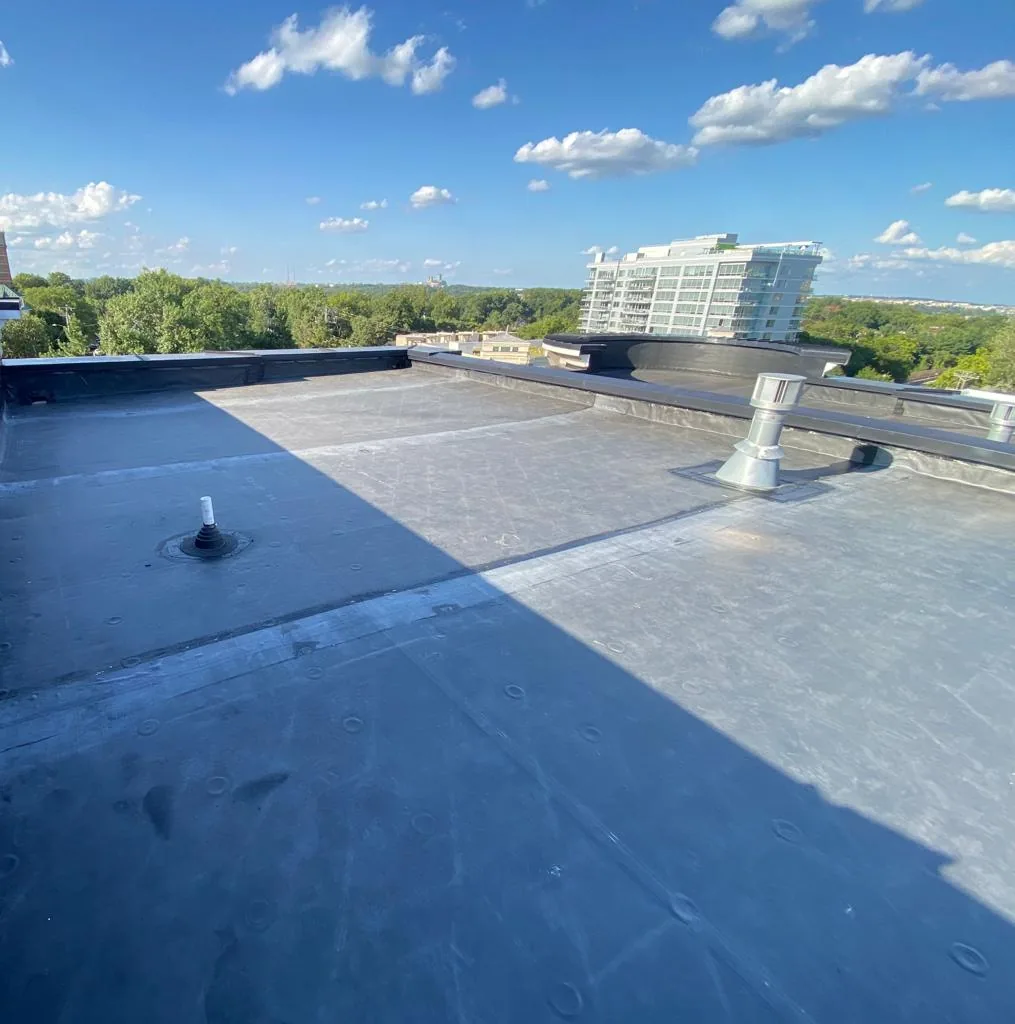
For most DC properties, a metal roof conversion involves the steep-slope front section of the row house — typically 800–1,600 sq ft of pitched roof. The rear flat section is typically a membrane replacement (TPO or EPDM) handled separately. Standing seam metal on the front slope eliminates the need for another shingle replacement for 50+ years and significantly reduces hail and wind storm damage risk.
HPRB Historic District Considerations: DC's historic districts — Georgetown, Capitol Hill, Logan Circle, LeDroit Park, Shaw, Dupont Circle, and others — require Historic Preservation Review Board (HPRB) or HPO staff-level clearance for visible roofing material changes. Copper standing seam is almost universally approved in Georgetown historic contexts. Galvalume with a dark paint finish is typically approved in Capitol Hill and other historic districts. HPRB review adds 4–8 weeks to the project timeline; we account for this in scheduling.
Urban Logistics: DC roofing projects require careful staging — narrow streets, resident parking permits for staging areas, and party wall considerations. We coordinate no-parking zone permits, manage material delivery to minimize street blockage, and communicate with neighbors about shared party wall work.
Party Wall Details: Metal roof installation on a DC row house must properly terminate at party walls. Improper party-wall flashing is one of the most common sources of DC row-house leaks. We custom-fabricate party-wall cap flashing and step flashing details for every project.
The Metal Roof Installation Process
Every King's Roofing metal installation follows the same quality-controlled sequence:
- Free inspection and measurement — We inspect the existing deck, framing, and ventilation. Decking defects are documented and priced before the contract is signed.
- Full tear-off — We remove all existing roofing to bare decking. No installations over existing material.
- Decking repair — Soft spots and delaminated areas are replaced with new 1/2" CDX plywood.
- High-temp underlayment — Synthetic underlayment rated for metal roofing (not standard felt) is installed before panels.
- Panel installation — Panels run ridge to eave with concealed floating clips allowing thermal movement without stress.
- Ridge cap, flashing, and trim — All exposed edges receive matching factory-finished trim. Valleys and penetrations receive custom-fabricated flashing.
- Final walkthrough — We walk every slope with the homeowner before closing out the permit and project.
Internal Links for Your Washington, DC Roofing Project
Explore related roofing services:
- Roofing in Washington, DC — full roofing services overview for Washington
- Flat & Low-Slope Roofing — TPO, EPDM, and membrane systems for Washington
- Free Phone Consultation — schedule a no-obligation estimate
- All Roofing Services — complete service menu for the DC metro
DC Contractor Licensing & Compliance
King's Roofing holds a current DC contractor license issued by the DC Department of Consumer and Regulatory Affairs (DCRA) Business License Division — required for all roofing and home improvement work in Washington, DC. Our DC contractor license number is displayed on every Washington DC proposal and contract. You can verify our license status through DCRA's online contractor verification portal before signing any agreement.
DC roofing law requires that any contractor performing repair or replacement work on a DC property hold a valid DC business license AND a DC home improvement contractor registration. King's Roofing maintains both, along with $2 million general liability insurance and workers' compensation coverage for all crew members working on DC properties.
When hiring any roofing contractor in Washington, DC, always request: (1) DC contractor license number, (2) proof of current general liability insurance, (3) workers' compensation certificate. King's Roofing provides all three on request before project commencement.
Frequently Asked Questions — Metal Roofing in Washington, DC
How much does standing seam metal roofing cost in Washington, DC in 2026?
Installed standing seam metal roofing in Washington, DC runs approximately $18,000–$35,000 for typical residential footprints, using Galvalume steel with Kynar 500 coating. Aluminum panels add 15–20% to the price. Copper and zinc accent sections are priced by scope. These costs are 2–2.5× architectural asphalt shingles upfront, but eliminate 2–3 future replacement cycles over the metal roof's 50+ year lifespan.
How long does standing seam metal last in Washington, DC's climate?
Properly installed Galvalume standing seam metal roofing carries a 50+ year structural warranty and a 40-year Kynar paint warranty. In DC metro climates — with summer UV exposure, periodic hail, and occasional ice events — metal consistently outperforms its warranty. Several standing seam installations from the 1970s and 1980s are still in service in the region.
Do I need DCRA and HPRB approval for a metal roof in Washington?
A DCRA building permit is required for all roofing work in Washington DC. If your property is in a designated historic district (Georgetown, Capitol Hill, Logan Circle, Shaw, etc.), you also need HPRB clearance for visible material changes. King's manages both processes — we prepare the historic documentation and attend hearings when required. DCRA permits typically take 4–8 weeks; HPRB adds 4–8 weeks for designated properties.
How long does DCRA permitting take for a metal roof in DC?
DCRA residential building permits for metal roof replacement typically take 4–8 weeks. HPRB historic review, when required, adds an additional 4–8 weeks. King's Roofing submits electronically through DC Access eServices and follows up actively to keep the process moving. We hold your project slot during the permit review period.
What metal roofing options are historically appropriate for a DC row house?
For Georgetown Federal-era homes, copper standing seam is the historically appropriate and HPRB-preferred material. For Capitol Hill Victorian properties, Kynar-coated Galvalume in dark charcoal or bronze is typically approved. For non-historic-district DC properties, the full range of Galvalume colors is available. We prepare HPRB submittals including manufacturer documentation and historic-match justification.
Ready to get a flat roof or metal roof estimate for your Washington, DC property? Call (703) 712-1506 or schedule a free phone consultation — we respond within one business day and can often inspect within the same week.