How Long Does a Roof Last in Northern Virginia? A Complete Homeowner's Guide

By King's Roofing Company 9 min read Fairfax, VA

It's one of the most common questions we field at King's Roofing: "How much life does my roof have left?" It's a fair question — and one that deserves a direct answer rather than a vague "it depends." This guide gives you real numbers, broken down by material, calibrated for the specific punishment a Northern Virginia roof endures every year.

The short version: most asphalt shingle roofs in the DMV last 18–26 years, not the 30 years stamped on the warranty. Metal roofs routinely hit 45–60 years. Flat roofs vary dramatically by system. Here's why — and what to look for as yours ages.

Why the DMV is Harder on Roofs Than Most Places

Northern Virginia sits at an awkward intersection of climate zones — warm enough to feel mid-Atlantic most of the year, cold enough to freeze hard in January. That combination creates a specific set of stressors that manufacturer warranty tables, written for idealized average climates, quietly ignore.

Summer heat cycles. Fairfax, Arlington, and McLean regularly see 95–100°F surface temperatures on dark shingles in July and August. Every heating and cooling cycle causes thermal expansion and contraction, working sealant strips loose and accelerating granule loss — the sand-like coating that protects shingles from UV degradation.

Freeze-thaw damage. Winters bring repeated freeze-thaw cycles rather than a single sustained cold spell. Water works into micro-cracks in shingles and around flashings, freezes, expands, thaws, and repeats. Over a decade, this splits otherwise-sound shingles and lifts flashings away from chimneys, skylights, and valleys.

Ice dams. Inadequately insulated attics — extremely common in older homes in Falls Church, Annandale, and Alexandria — allow heat to escape through the roof deck, melting snow that then refreezes at the cold eaves. Ice dams trap water behind a wall of ice, forcing it under shingles and into the decking. This is one of the most common causes of interior water damage we see in January and February.

Humidity and biological growth. The DMV's high humidity — particularly in wooded neighborhoods in Great Falls, Reston, and Burke — accelerates moss, algae, and lichen growth on north-facing and shaded roof sections. Left untreated, lichen physically lifts shingle tabs, while algae staining indicates moisture retention that speeds deterioration.

The 20-Year Rule in Northern Virginia: If your asphalt shingle roof is approaching 20 years old and you've never had a professional inspection, schedule one now — even if it looks fine from the ground. Granule loss and cracked sealant strips are invisible from the street but obvious up close, and they indicate you're likely within 3–5 years of needing replacement.

Roof Lifespan by Material: Northern Virginia Benchmarks

These ranges are based on our field experience across thousands of roofs in Fairfax County, Arlington, Loudoun, and Prince William — not manufacturer marketing materials.

Roofing Material Expected Lifespan (NoVA) Key Limitation
3-Tab Asphalt Shingles 15–20 years Thin profile, poor wind resistance
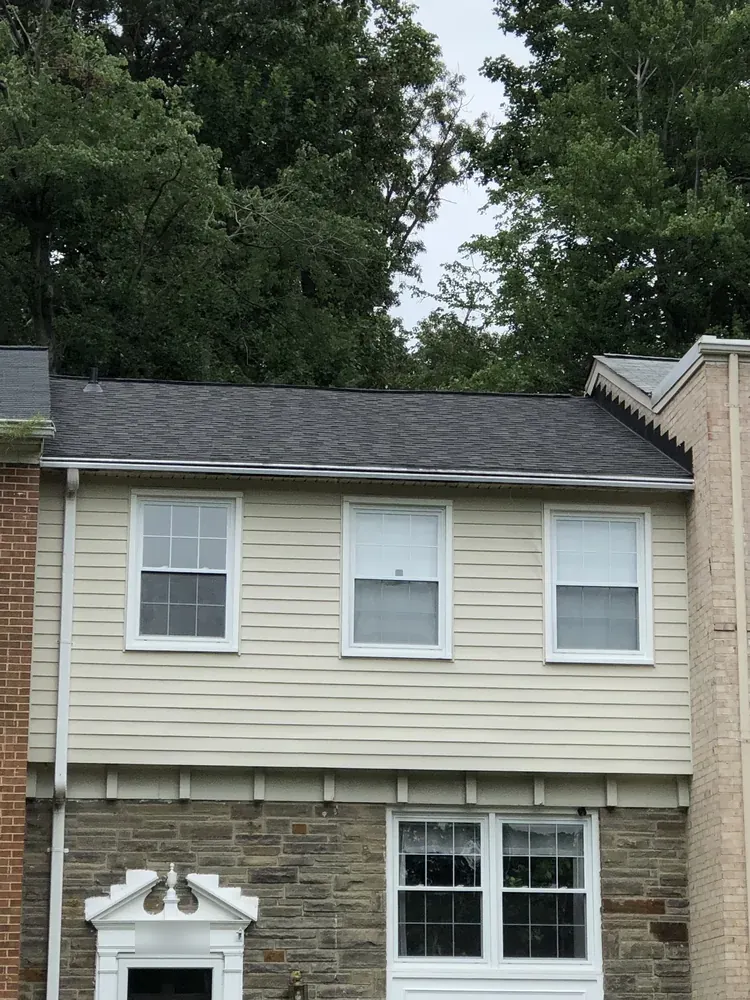
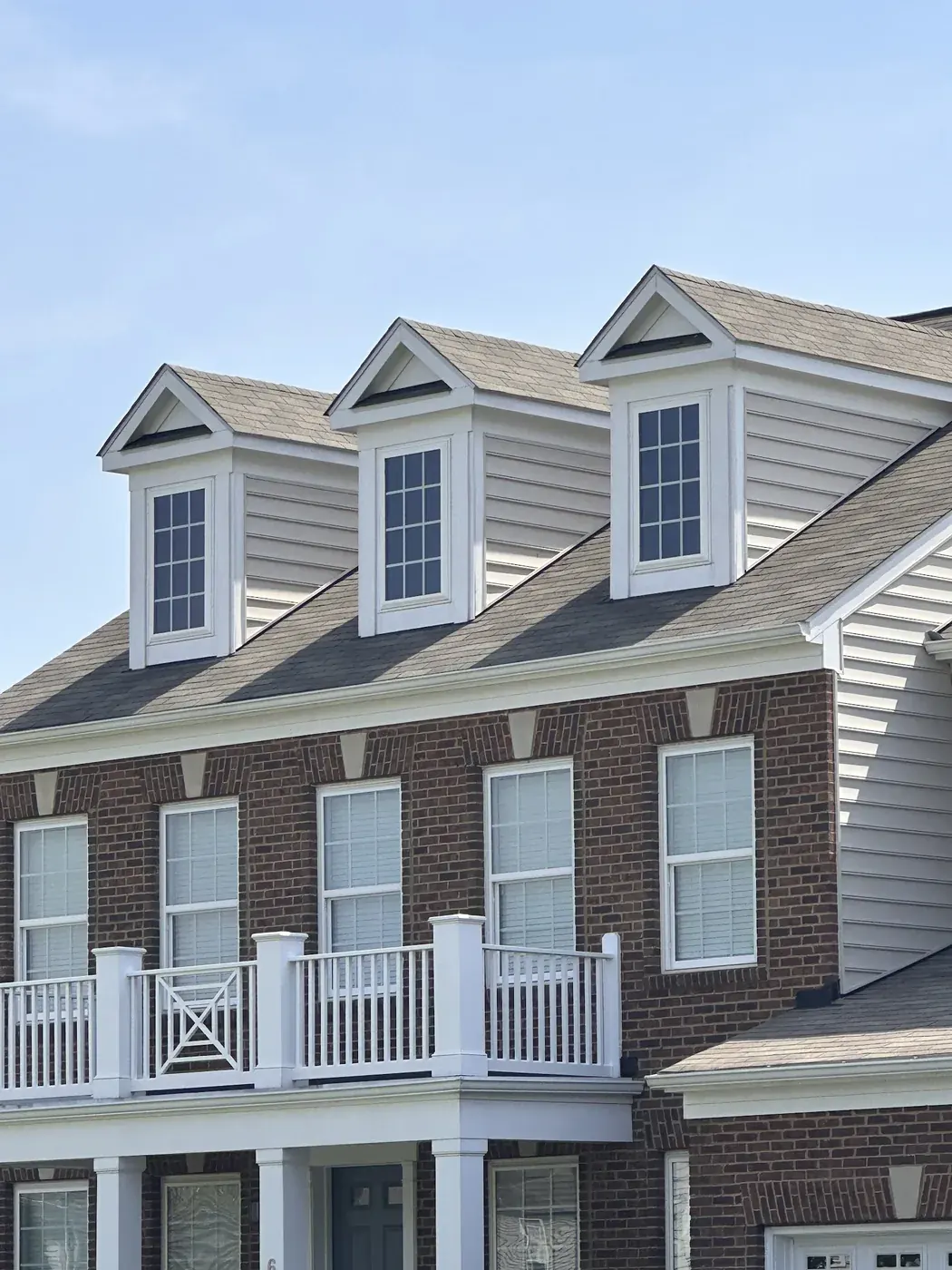
Architectural (Dimensional) Shingles 22–28 years Best overall value for NoVA climate
Impact-Resistant (Class 4) Shingles 28–35 years Higher upfront cost; insurance discounts available
Standing Seam Metal 45–65 years Higher install cost; excellent in all weather
Stone-Coated Steel 40–55 years Good aesthetics; some noise in heavy rain
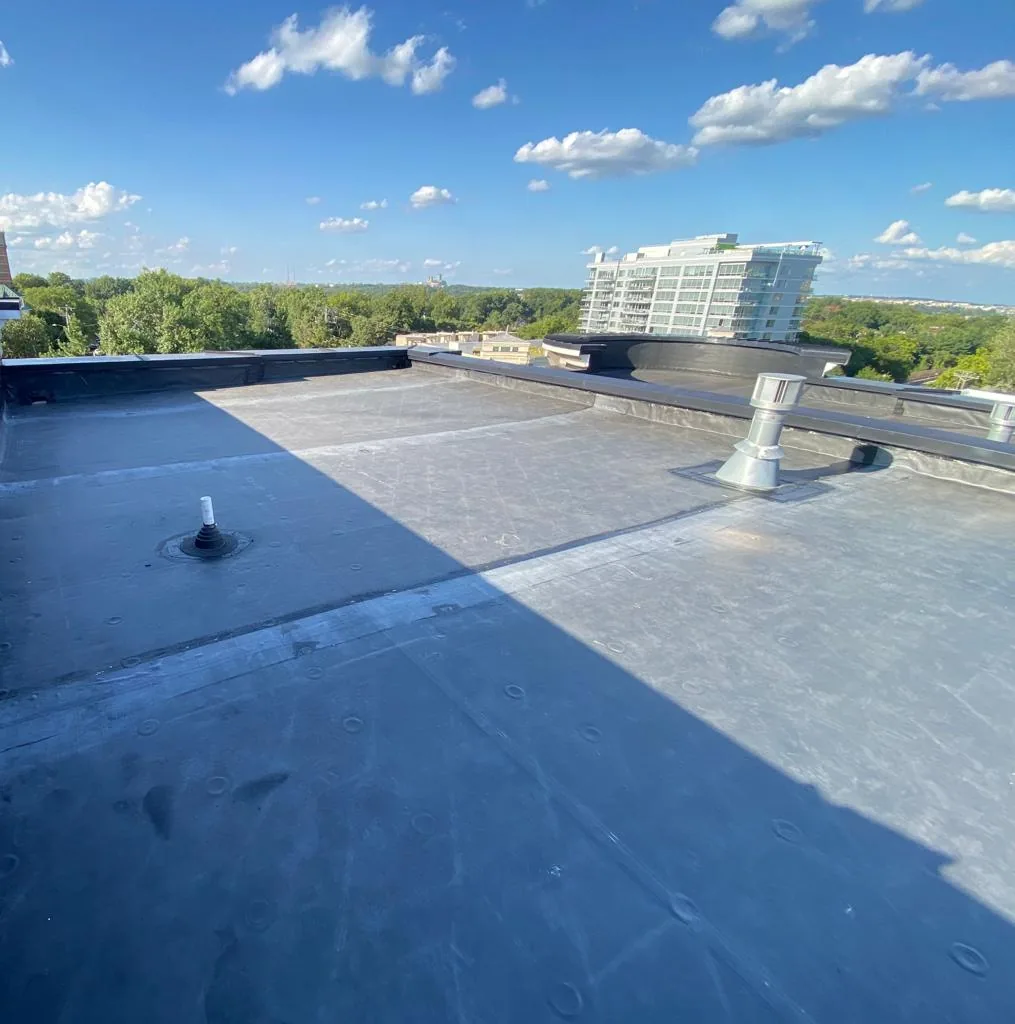
Flat Roof — TPO 15–25 years Quality of installation is the critical variable
Flat Roof — EPDM (Rubber) 20–30 years Reliable; vulnerable to punctures
Flat Roof — Modified Bitumen 12–20 years Budget option; common on older DC-area rowhouses
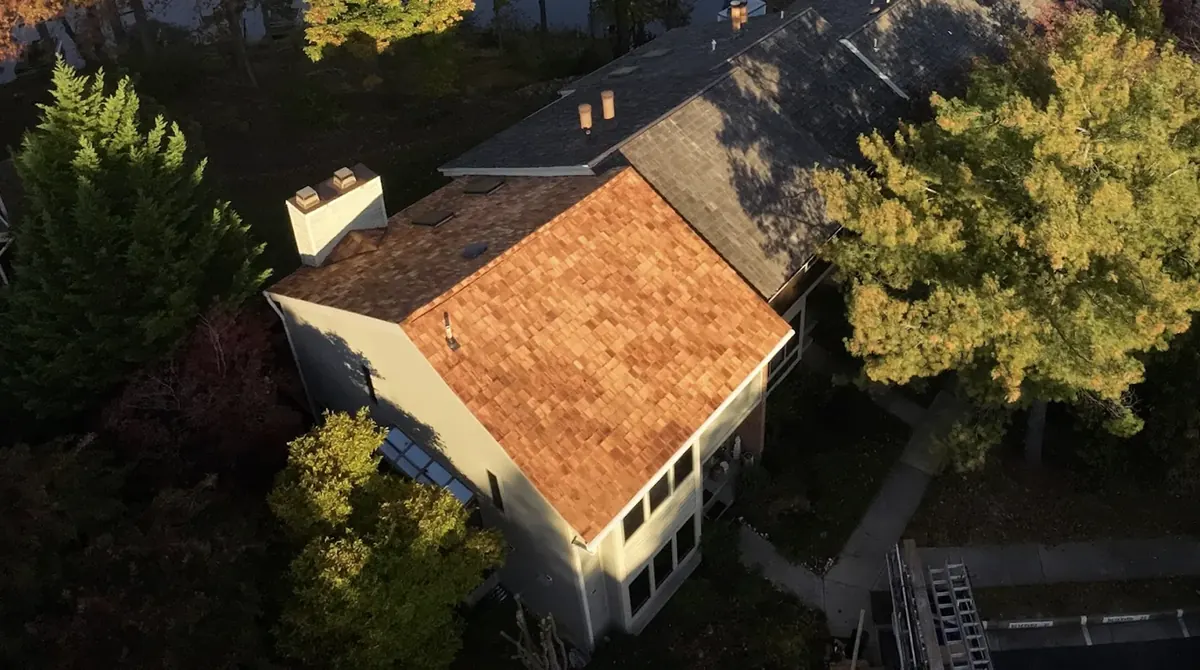
Composite Shake / Synthetic 30–50 years Excellent performance; limited installer experience
Natural Slate 75–125 years Premium cost; requires specialized installer

Our recommendation for most Northern Virginia homes: GAF Timberline HDZ or Owens Corning Duration architectural shingles in a Class 4 impact-resistant version. They carry a lifetime limited warranty, perform well in our climate, and often qualify for a 10–20% homeowner's insurance discount — which partially offsets the modest premium over standard architectural shingles.

What Shortens a Roof's Life Prematurely

Material and climate aside, the single biggest predictor of roof longevity is the quality of the original installation. We inspect hundreds of roofs in Northern Virginia each year, and the failures we see most often trace back to shortcuts that were invisible the day the job was done.

Poor attic ventilation

Inadequate ventilation traps heat and moisture in the attic space. Heat in summer accelerates shingle aging from below; moisture in winter causes decking rot and condensation damage. Virginia code requires balanced ridge and soffit ventilation — but many older homes and some newer builds fall short. If your attic runs 20°F hotter than the outside air on a summer day, your roof is paying the price.

Improper flashing installation

Flashings — the metal pieces that seal roof penetrations at chimneys, skylights, dormers, and valleys — are where virtually all serious leaks originate. Step flashing must be woven between each shingle course, not caulked over. Counter-flashing at chimneys must be embedded in mortar joints. When it isn't, you get a roof that looks perfect for five years and then develops a leak that travels 20 feet from the source before it shows up on your ceiling.

Nailing too high

Shingle nails must penetrate through the nailing strip — a very specific zone on each shingle. Nailed too high (a common production-crew shortcut), the tabs are unsecured and can blow off in 45 mph winds, which Northern Virginia sees several times a year in spring and fall. We see this constantly on roofs installed by non-specialist crews during the post-storm rush.

Insufficient ice-and-water shield

Virginia Building Code requires ice-and-water shield at eaves and valleys. In our climate, we install it up the first six feet of the eave and throughout every valley — and in heavily shaded or north-facing sections, we extend it further. Skipping it to save material cost is one of the leading causes of the ceiling stains we investigate in February.

8 Warning Signs Your Roof Is Aging Out

You don't need to climb on your roof to spot most of these. A pair of binoculars from the ground or the view from a second-floor window shows you enough.

  1. Granule loss in gutters. Finding significant amounts of sand-like granules in your gutters or downspout outlets means shingles are shedding their UV-protective coating. Normal in the first year after installation; a red flag after year 12.
  2. Curling or cupping tabs. Shingle edges that curl upward (cupping) or downward (curling) indicate moisture imbalance, age-related stiffening, or improper attic ventilation. Either way, the shingles have lost their ability to shed water properly.
  3. Cracked or missing shingles. Individual cracks after a severe hail event are repaired; widespread cracking across multiple slopes means the shingles have become brittle. Missing shingles expose decking to rain immediately.
  4. Sagging roof deck. Any visible dip, wave, or sag in the roof plane indicates compromised decking or structural members below. This is an emergency — get a professional on the roof that week.
  5. Daylight visible from the attic. Stand in your attic on a sunny day with the lights off. Visible light through the decking means gaps that let water in every time it rains.
  6. Staining on interior ceilings or walls. Brown or yellow water stains inside the home often take years to appear after the leak starts, because water travels along rafters and insulation before finding a path through the ceiling. By the time you see the stain, the leak has usually been active for months.
  7. Moss or lichen covering more than 10% of the surface. Minor algae staining (the black streaks on north slopes) is cosmetic. But heavy moss or lichen growth physically lifts shingle tabs and retains moisture. Pressure washing alone doesn't solve the underlying drainage problem.
  8. Multiple repairs in the last three years. If you've had two or more repair calls in three years to different parts of the roof, you're in the stage where patchwork costs more long-term than replacement. A full assessment tells you the honest math.

Repair vs. Replace: How to Make the Call

The financial decision point is simpler than most homeowners expect. We use a rule of thumb: if the repair cost exceeds 25–30% of the replacement cost, and the roof is within 7 years of its expected end of life, replace. Spending $3,500 to patch a 24-year-old architectural shingle roof when replacement would cost $14,000 is often money lost — because the next section will fail within two years.

The exception is a roof with genuinely isolated damage — a chimney flashing failure on a 12-year-old roof in otherwise good condition, or a small valley repair caused by debris damage. Those are legitimate candidates for targeted repair.

The only reliable way to make this call is a professional inspection with someone who will get on the roof — not just look at it from the driveway. At King's Roofing, we photograph every section, check the attic, probe the decking at all penetrations, and give you a written condition report with honest recommendations. We don't sell roof replacements to people who don't need one — a repair referral today means you'll call us when you do need a replacement.

Get a Free Roof Assessment

Our team serves Fairfax, Arlington, McLean, Reston, Herndon, Alexandria, and 22 other Northern Virginia communities. We'll inspect your roof and give you a straight answer — in writing.

Book a Free Phone Consultation

Frequently Asked Questions

How long do asphalt shingles last in Northern Virginia?

Standard 3-tab asphalt shingles last 15–20 years in Northern Virginia's climate. Architectural (dimensional) shingles last 22–28 years. Premium Impact-Resistant (IR) shingles rated for Class 3 or Class 4 impacts can reach 30+ years.

The DMV's freeze-thaw cycles, summer heat, and humidity shorten lifespans compared to milder climates — typically landing roofs at the lower end of manufacturer estimates rather than the higher end.

Does Northern Virginia's climate shorten roof lifespan?

Yes, significantly. The DMV sits at the edge of two climate zones, creating unusually harsh conditions: summer temperatures routinely push 95–100°F on dark shingles, causing thermal expansion; winter brings repeated freeze-thaw cycles rather than a single sustained cold spell; spring storms deliver heavy rain and periodic hail; and the region's high humidity accelerates moss and algae growth on shaded slopes.

Roofs in this region consistently reach the lower end of manufacturer lifespan estimates. A 30-year warranty shingle should be inspected carefully after 20 years.

How much does a roof replacement cost in Fairfax, VA?

In 2026, a typical residential roof replacement in Fairfax and surrounding Northern Virginia communities costs $8,500–$18,000 for a standard 1,500–2,500 sq ft home with architectural shingles. Metal roofing ranges $16,000–$35,000. Flat roofs (TPO/EPDM) run $6,000–$14,000.

Actual cost depends on square footage, roof pitch, number of layers to remove, decking condition, and material grade. King's Roofing provides free written estimates with no obligation.

When should I repair vs. replace my roof?

Repair if: the roof is under 15 years old, damage is isolated to one area (under 25–30% of the roof surface), and the underlying decking is sound. Typical repair scenarios: a single flashing failure, a wind-damaged section of shingles, or isolated valley damage.

Replace if: the roof is within 5–7 years of its expected lifespan, more than 30% of shingles are compromised, there is widespread granule loss, you've had multiple repairs in recent years, or there is decking rot or structural sagging. A professional inspection with full documentation is the only reliable way to make this call.

Does Virginia require a permit for roof replacement?

Yes. In most Northern Virginia jurisdictions — including Fairfax County, Arlington County, Alexandria City, Prince William County, and Loudoun County — a building permit is required for full roof replacement. Permits are generally not required for like-for-like repairs covering less than 25% of the roof area.

King's Roofing pulls all required permits as a standard part of every replacement project. Working with a contractor who skips the permit leaves you exposed to code-compliance issues at resale and voids most manufacturer warranties.