Roofing Contractor in Springfield, VA: Residential & Commercial Guide
If you own a home or a commercial building in Springfield, VA, a roof replacement in 2026 typically runs $9,000–$15,500 for a standard residence and follows a Fairfax County permit process — and the right contractor for your property depends heavily on whether you have a 1970s split-level off Backlick Road or a strip commercial building along Franconia Road. This guide covers both sides of Springfield's mixed market: what your roof is likely made of, what replacement costs, and how to vet a roofer who actually knows the area.
King's Roofing serves every Springfield ZIP code — 22150, 22151, 22152, and 22153 — from our Fairfax headquarters, so the patterns below come from work on the ground in these neighborhoods, not generic estimates.
Roofing in Springfield, VA — A Large, Mixed Residential and Commercial Market
Springfield is one of Fairfax County's largest communities, anchored by the I-95/I-395/I-495 interchange — the "Mixing Bowl" — that makes it a major commercial and residential hub for Northern Virginia. That dual character shapes everything about roofing here. You are not working in a single-vintage subdivision; you are working across decades of housing stock and a substantial inventory of commercial buildings, often within a few blocks of each other.
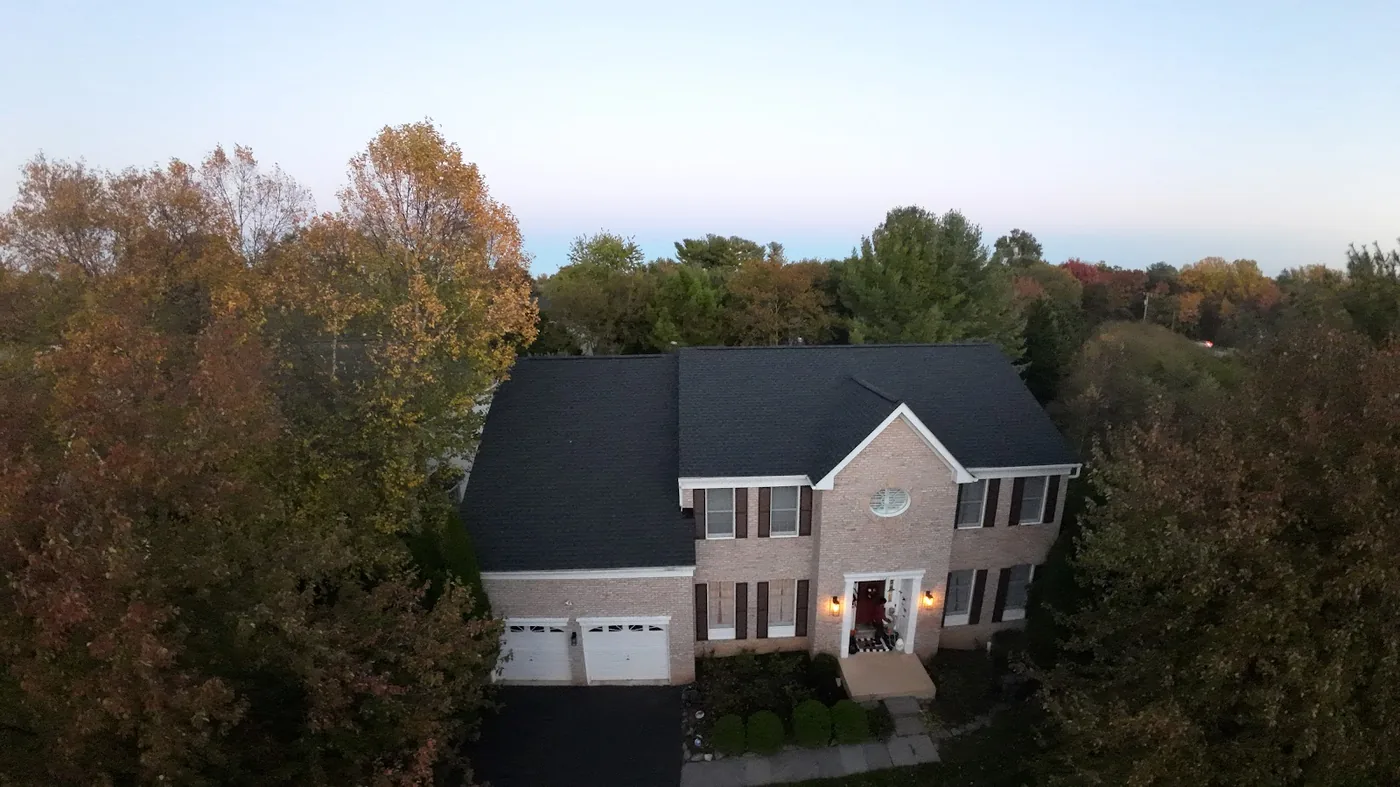
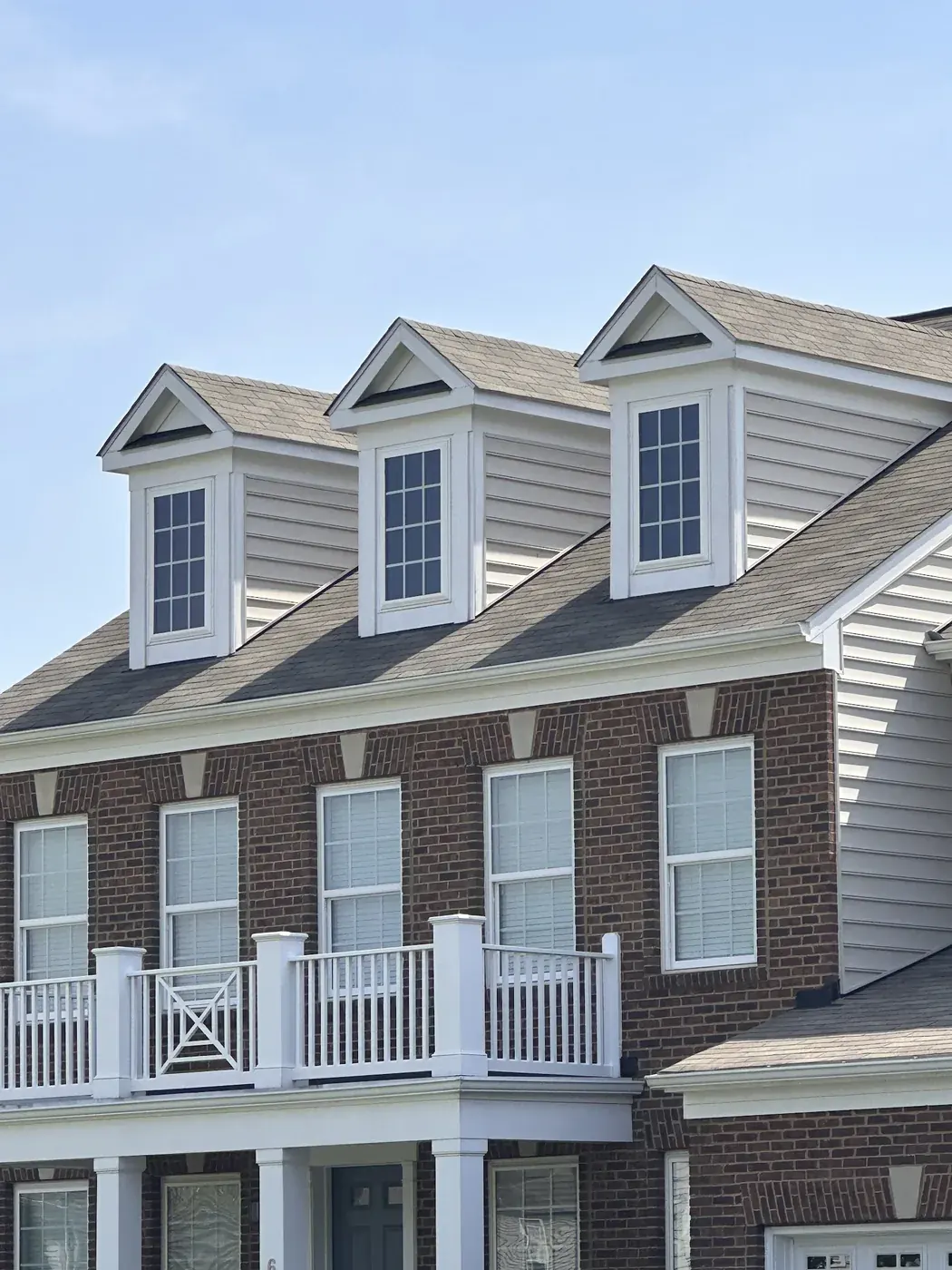
On the residential side, the stock is predominantly 1960s through 1990s colonials, split-levels, and townhomes. These are solid, well-built homes, but the older ones are now on their second or third roofing cycle, and the construction details of that era create predictable issues a local contractor learns to anticipate.
On the commercial side, Springfield carries significant strip commercial and office development, concentrated along the Franconia Road and Backlick Road corridors. Many of those buildings went up between the 1980s and early 2000s and carry low-slope flat roof systems that are now at or past their service life. Proximity to the Franconia-Springfield Metro station has also driven a wave of residential infill and renovation, which means newer construction is mixed in alongside the original stock. A roofer working in Springfield needs to be comfortable with both worlds.
Common Roof Types in Springfield's Housing Stock
The 1960s and 1970s homes that make up much of Springfield commonly feature lower-slope designs — 6:12 pitch or less — on split-levels and ramblers. These are not flat roofs, but they are shallow enough that standard steep-slope installation techniques require modification to shed water reliably. Getting this detail wrong is one of the most common reasons a Springfield roof fails early.
Many of these homes are now on their third roofing cycle, and that history produces a recurring set of problems we look for on every Springfield inspection:
- Multiple layers. Older homes often have two or more layers of shingles stacked up. Virginia code allows a maximum of two, and a third layer means a full tear-off is required — which adds cost but is non-negotiable for a sound install.
- Aging original decking. Plywood or plank decking from the original build may be brittle, delaminated, or rotted at the eaves after decades of service. It often needs partial replacement once the old shingles come off.
- Insufficient attic ventilation. Split-level designs are notoriously hard to ventilate effectively. Cramped, compartmentalized attic spaces trap heat and moisture, which cooks shingles from below and shortens their life.
The combination of decking age, poor ventilation, and prior multiple tear-offs is the signature pattern of Springfield's older housing — and an experienced contractor prices and plans for it up front rather than springing change orders on you mid-job. If your home falls into this category, a full roof replacement done with corrected ventilation usually solves several problems at once.
Roof Replacement Cost in Springfield, VA (2026)
For most Springfield homes — typically 20 to 26 roofing squares with dimensional asphalt shingles — replacement runs $9,000–$15,500 in 2026. That range reflects standard Fairfax County pricing and assumes a straightforward single-layer or two-layer tear-off over sound decking.
Two factors move the number within and above that range:
- Multi-layer tear-off: removing a second or third layer of old shingles adds roughly $500–$1,200 in labor and disposal.
- Decking repair: any rotted or delaminated sheathing discovered after tear-off is replaced at additional cost — usually quoted per sheet.
One piece of good news for Springfield: steeper-than-standard pitches are uncommon in the local housing stock, so most jobs are standard complexity rather than the premium-priced steep or cut-up roofs you see in some newer luxury subdivisions. On the permit side, a full replacement requires a building permit through Fairfax County DPMM, which runs $150–$300. A reputable contractor pulls that permit for you. Finally, note that some Springfield HOA communities have architectural review requirements governing shingle color and style — confirm yours before you sign, because a non-compliant install can mean tearing off a brand-new roof.
It is also worth understanding what is — and is not — included in a typical Springfield quote. A complete replacement should cover tear-off and disposal of the existing roof, new underlayment, ice-and-water shield at eaves and valleys, drip edge, new flashing, ridge and soffit ventilation upgrades where needed, the shingles themselves, and the permit. Be wary of a bid that comes in noticeably below the $9,000 floor for a full-size home; the gap is almost always made up by reusing old flashing, skipping ice-and-water shield, or laying new shingles over an old layer rather than tearing off. Those shortcuts are invisible on the day the job finishes and expensive a few winters later. The honest way to compare two Springfield estimates is line by line, on identical scope — which is exactly why getting every quote in writing matters so much.
Commercial Roofing Near I-95 — What Springfield Businesses Need
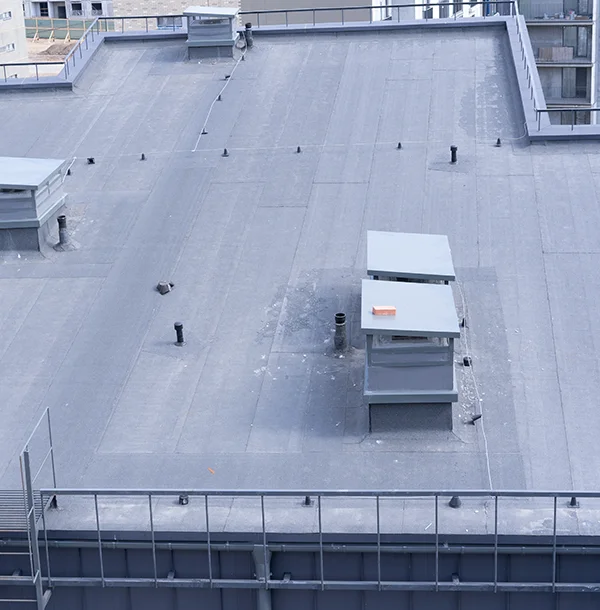
Springfield's commercial corridors are a different roofing world. The strip and office buildings along Franconia Road and Backlick Road predominantly carry built-up (BUR) or modified bitumen flat roofs installed between the 1980s and 2000s — and a large share of them are now approaching or past end of life. If you manage one of these properties, you are likely already dealing with recurring leaks, ponding water, or rising patch costs.
For most of these buildings, TPO replacement is the standard recommendation. A white, reflective, heat-welded single-ply membrane reduces summer cooling load, seals far more reliably than aging adhesive or torch-down seams, and delivers a 15–25 year service life. It is the system we specify most often for Springfield commercial work, though for some complex or heavily penetrated roofs a different membrane may make more sense — that is a building-by-building call.
The detail that sinks commercial flat roofs in Springfield is HVAC equipment penetration management. Rooftop units, condensate lines, and the curbs and pitch pockets around them are a constant source of membrane failure when they are flashed poorly or neglected. Specialist treatment of these penetrations during a flat roof replacement — proper curbs, welded boots, and a maintenance plan afterward — is what separates a commercial roof that lasts its full term from one that leaks within five years.
Choosing a Roofer in Springfield
Whether your project is residential or commercial, the vetting process is the same — and it protects you from the storm-chasing crews that sweep through Fairfax County after every major weather event. Work through this checklist before you sign anything:
- Verify the Virginia DPOR Class A licence. Look it up directly at dpor.virginia.gov. Class A is the appropriate license tier for full roof replacement work.
- Request a Certificate of Insurance. Confirm active general liability and workers' compensation coverage — and that the certificate names your project. Without it, you can be exposed if a worker is injured on your property.
- Ask for Springfield-area references. A contractor who genuinely works in your area can point to recent jobs in 22150–22153, not just "Northern Virginia" in general.
- Confirm permit-pulling capability. The roofer should pull the Fairfax County DPMM permit as a standard part of the job, not push that paperwork onto you.
- Get the estimate in writing. It should specify shingle brand, model, and warranty tier — or membrane type and thickness for commercial — so you are comparing identical scopes across bids.
King's Roofing meets every item on that list and serves all Springfield ZIP codes from our Fairfax headquarters. If you want a contractor who already knows the quirks of Springfield's split-levels and commercial corridors, we are a short drive away.
Free Springfield Roof Inspection
Residential or commercial, we'll inspect your Springfield roof and give you a straight, written assessment. Call (703) 712-1506 to schedule your free inspection.
Book a Free Phone ConsultationFrequently Asked Questions
How much does roof replacement cost in Springfield, VA?
$9,000–$15,500 for most Springfield residences (20–26 squares, dimensional asphalt). Multi-layer tear-off common on older homes adds $500–$1,200. Fairfax County permit: $150–$300.
Does Fairfax County require a permit for roof replacement in Springfield?
Yes. All Springfield properties are in Fairfax County — a building permit through DPMM is required for full tear-off and replacement.
What commercial roofing options are available in Springfield, VA?
Most Springfield commercial flat roofs are modified bitumen or built-up systems approaching end of life. TPO is the recommended replacement for commercial properties along Franconia Road and Backlick Road — white, reflective, heat-welded seams, 15–25 year lifespan.
What roofing material works best on 1970s Springfield split-levels?
Dimensional asphalt (GAF Timberline HDZ or OC Duration) is the right choice for most Springfield split-levels — it handles the lower-slope designs common in Springfield's 1970s housing stock. Ensure the contractor uses the correct installation method for your specific pitch.
How do I find a licensed roofer in Springfield, VA?
Verify Virginia Class A licence at dpor.virginia.gov, confirm Fairfax County permit-pulling capability, and request a Certificate of Insurance covering general liability and workers' compensation. Get the estimate in writing with shingle brand, model, and warranty tier specified.