Older pitched roofs
Mid-century houses on both sides of the line call for roof repair at flashings, valleys and chimneys, and roof replacement when the shingles have run their course.
Falls Church is two permit jurisdictions under one name. Inside the independent City, the Department of Code Administration decides what a roof job needs. Seven Corners, Bailey's Crossroads, Idylwood, West Falls Church, Lake Barcroft and Pimmit Hills carry a Falls Church mailing address but answer to Fairfax County. We sort out which side of the line your house is on first, then talk through the roof.
City or county
The City's own address page says that not all Falls Church mailing addresses are inside the City limits. Its rules of thumb: most residential addresses in the City have three digits, most addresses numbered 1400 and over are outside it, and addresses on Leesburg Pike, Route 7, Arlington Boulevard, Route 50, Lee Highway or Route 29 are likely not in the City.
ZIP codes help only a little. The City's main ZIP is 22046, with a few properties in 22042, 22044 and 22205, so a ZIP alone does not settle it.
What we do here
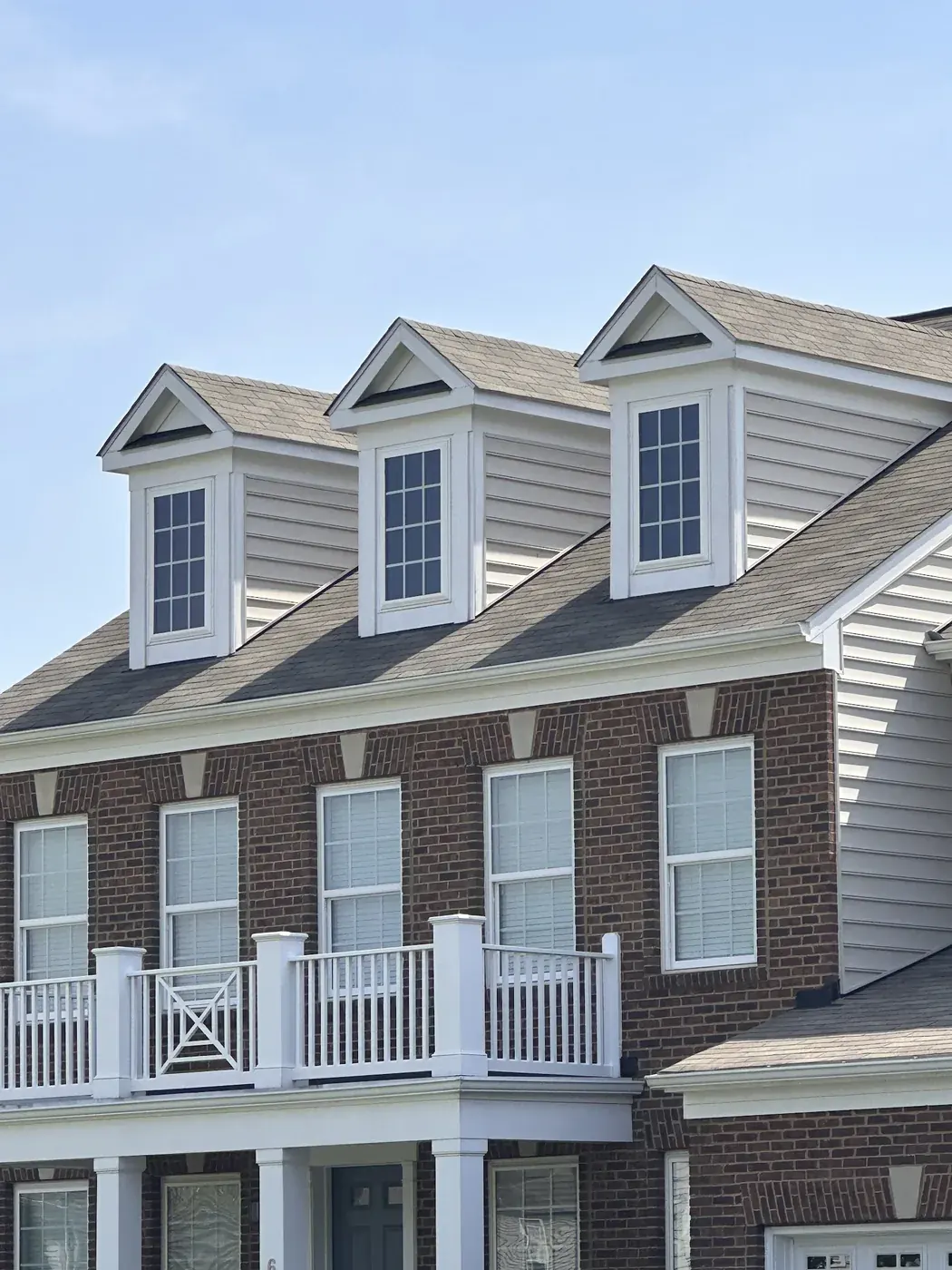
The housing mix decides the work, and it splits along the City line.
Mid-century houses on both sides of the line call for roof repair at flashings, valleys and chimneys, and roof replacement when the shingles have run their course.
Attached buildings bring shared roof sections, association approvals and, in the county, a fire-rated decking question.
Rear additions, porch tops and multi-unit buildings use membranes, covered in the TPO section below and on our flat roof page. See all materials.
Permits
Confirm your exact scope with the office before work is scheduled. The table shows what each office's pages say today.
| What you plan | City of Falls Church addresses | Fairfax County addresses with a Falls Church mailing city |
|---|---|---|
| Who to ask | Department of Code Administration, permits line 703-248-5080, zoning line 703-248-5040 | Fairfax County Land Development Services, 703-222-0801 |
| Replacing the roof covering on a single-family house | The City says you can replace your roof without a permit as long as you are not replacing rafters or a major portion of the decking | The county lists replacement of roof shingles among work that needs no permit |
| Roof repairs or chimney repairs | The City's pages do not address these, so confirm with the office | The county lists roof repairs and chimney repairs as work that needs a permit |
| Replacing roof plywood or framing | The City says anything involving framing needs a permit and does not put a number on a "major portion" of decking, so ask the office | The county lists replacing less than 256 square feet (9 boards) of roof plywood as no permit, unless the decking must be fire rated, such as on townhomes |
| Townhouse or condominium roof | The City's pages are written for single-family dwellings, so ask the office | Fire-rated decking on townhomes is the county's one exception to the plywood allowance |
Office names moved recently. The City's Code Administration page says that effective July 1, 2026 its former Zoning and Building Safety divisions combined into one Department of Code Administration at City Hall, 300 Park Avenue.
The permits counter runs Monday to Friday, 8 a.m. to 5 p.m., and is closed to the public on the last Wednesday of the month.
For county addresses the Virginia building code also matters. The Virginia building code, section 13VAC5-63-80, exempts replacing roof covering on houses in most wind zones, but lets a building official require a permit in a locally designated historic district.
Historic overlay
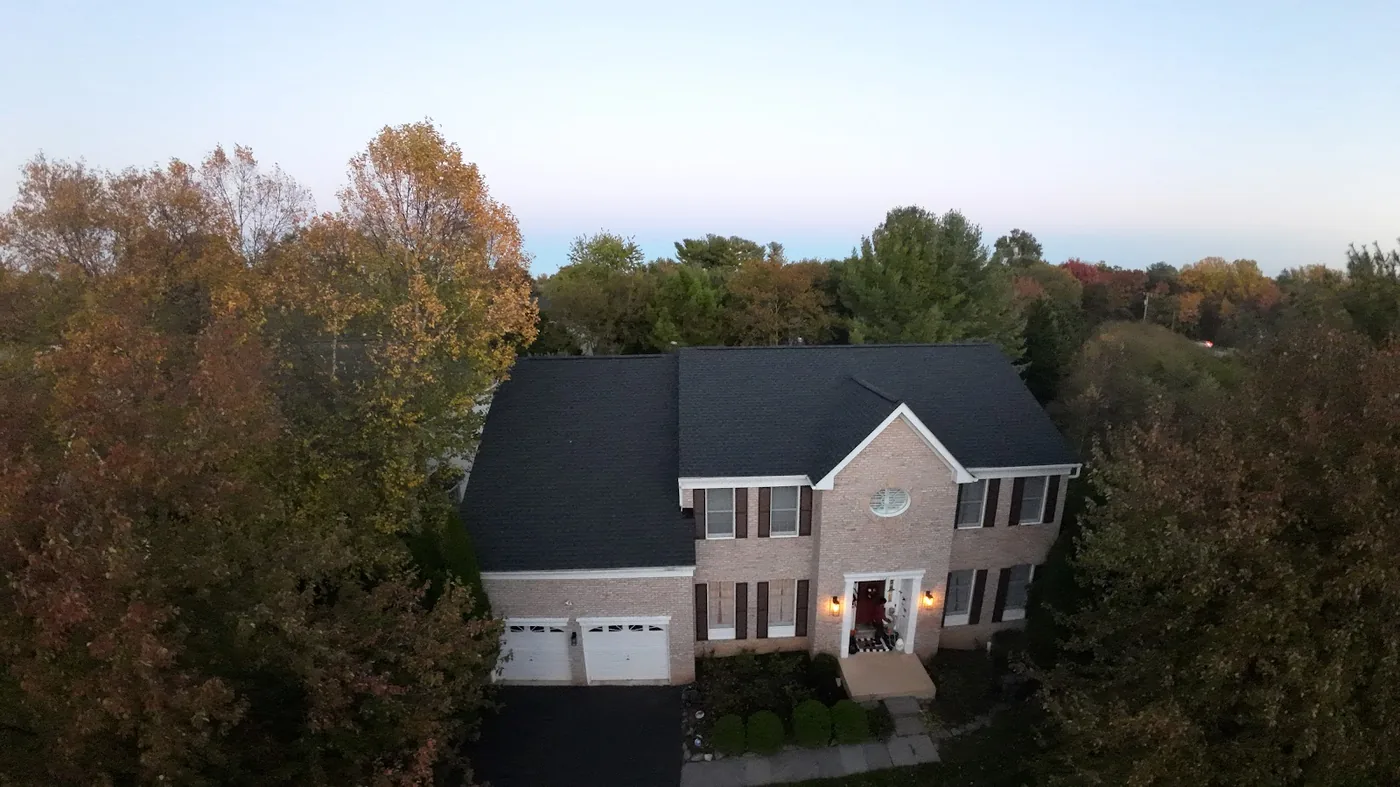
The City's Historic Architectural Review Board reviews applications to demolish or move protected structures in the historic district, and that district is a zoning overlay covering the entire City. The City defines historic structures as those built as residences during or before 1910, plus any other structure the ordinance names.
For alterations of historic structures the page says the board makes recommendations only. It does not mention roofing. The City Code reads two ways: Section 48-793 says the board approves or denies permits by vote, while Section 48-794 says that for alterations it gives advice and the permit is then granted. Which one applies to a roof is an open question for the City, so owners of very old houses should ask Code Administration, because the overlay is citywide. Outside the City, none of Fairfax County's historic overlay districts carries the name of a Falls Church area.
Low-slope roofs
TPO is the white or light gray membrane on many low-slope roofs. Here is where it fits in this mix of housing.
Low-slope roofs matter more here than in a houses-only suburb, because about 54 percent of City units sit in buildings with two or more units. Rear additions, porch tops and condominium roofs are places where a membrane can be considered.
TPO is a single-ply thermoplastic sheet. Seams are heat-welded with hot air, the surface is white or light gray, which reflects sun, and flashings at walls, drains and vents are done with matching pieces.
Look at the drainage first, because TPO should not sit in standing water. Ask whether the insulation under the old roof is wet, whether the old surface can stay under a new one, and who maintains the roof on an attached building.
EPDM is the black rubber alternative, and PVC is another welded white membrane. Our flat roof page compares TPO, EPDM, PVC and modified bitumen side by side, and the TPO, EPDM and modified bitumen guide goes deeper. For condominiums and multi-unit buildings, read the full guide to TPO roofs in Falls Church.
Housing stock
Census numbers describe homes, not roofs, so treat them as context. They come from the American Community Survey 2024 five-year estimates.
The City has 6,585 housing units with a median build year of 1971. Of those, 48.9 percent date from before 1970, and 52.5 percent of occupied homes are owner-occupied.
Detached houses are 36.5 percent of City units and attached townhouses 9.7 percent. Buildings with 50 or more units hold 37.8 percent, so condominium and apartment roofs are a real share of the work.
West Falls Church is 60.1 percent detached with a median build year of 1962, Lake Barcroft 61.7 percent and 1961, and Pimmit Hills 74.2 percent and 1965. Seven Corners is the opposite: 13.6 percent detached, with 45.0 percent of units in buildings of 50 or more.
Two neighborhood histories show how old many of the county houses are. Lake Barcroft's association says homesites were first sold in the summer of 1950, across about 1,020 lots. Pimmit Hills says ground was broken in May 1950 for 1,642 homes, most on small three-bedroom plans.
Weather and trees
FFXnow reported that the overnight thunderstorm of September 3 and 4, 2026 brought gusts topping 60 mph, reaching 69 mph around Tysons, and that more than 16,000 Dominion customers in Fairfax County lost power. Its list of downed-tree closures included Annandale Road at Graham Road in West Falls Church. The report describes outages and fallen trees, not roof damage in Falls Church.
Process
You give us the street address, and we say which office applies to it.
A free 15-minute call about the roof type, its age if known, and where water shows inside.
Someone checks flashings, valleys, penetrations and the surface, and what sits below if it can be reached.
The scope in plain terms, what is excluded, and which permit questions you should confirm with the office.
Done to the written plan, with the site protected and the roof left clean.
Reviews
5.0 on Google from 60 reviews.
FAQ
Only if the parcel is inside the 2.05 square mile City. Many Falls Church mailing addresses are in Fairfax County, and those go to Land Development Services. Give us your street address and we will point you to the right office.
The City's page gives no square-foot figure for it. If your plan includes replacing roof boards, call Code Administration at 703-248-5080 with the scope and ask how it applies to your house.
The City's page says the counter is closed to the public on the last Wednesday of each month.
The board's page says it makes recommendations only for alterations of historic structures, and that mandatory review applies to demolition or moving. The City Code reads two ways: Section 48-793 says the board approves or denies by vote, and Section 48-794 says it advises and the permit is then granted. Roofing is not mentioned in either, so this is an open question for the City: ask Code Administration, especially because the overlay covers the whole City.
Those are Fairfax County communities, so the county's guidance applies, not the City's. The county lists shingle replacement as no-permit work and roof repairs as permit work, with fire-rated decking the exception on townhomes.
No. The station is in Arlington County, so a house near it follows Arlington's rules, not the City's. See Arlington.
The Department of Code Administration. The permits line is 703-248-5080 and the zoning line is 703-248-5040, both listed on the City's own page.
It can be, if the drainage works, the insulation is dry and the association agrees to the product. Many buildings here are multi-unit, so ask who owns the roof before choosing a system.
Nearby
Roofs next door follow different offices, so we keep each page separate: Vienna, McLean, Annandale and Arlington. See all of our service areas or read about King's Roofing.
Roof material guides for Falls Church: EPDM roofs in Falls Church, metal roofs in Falls Church, PVC roofs in Falls Church.
Talk through the next step
Give us the street address and the roof type on a short phone call. We will tell you which office to ask about permits before anyone is scheduled.
9220 Topaz St, Fairfax, VA 22031
Mon to Fri 7 AM to 8:30 PM, Sat 7 AM to 8 PM, closed Sunday