Spring roofing checklist for Northern Virginia homeowners
Four short lists to walk through with a cup of coffee: the yard, the gutters, the attic and the paperwork. Each item comes from NRCA, ARMA or IBHS guidance, and the permit step uses Fairfax County's own wording.
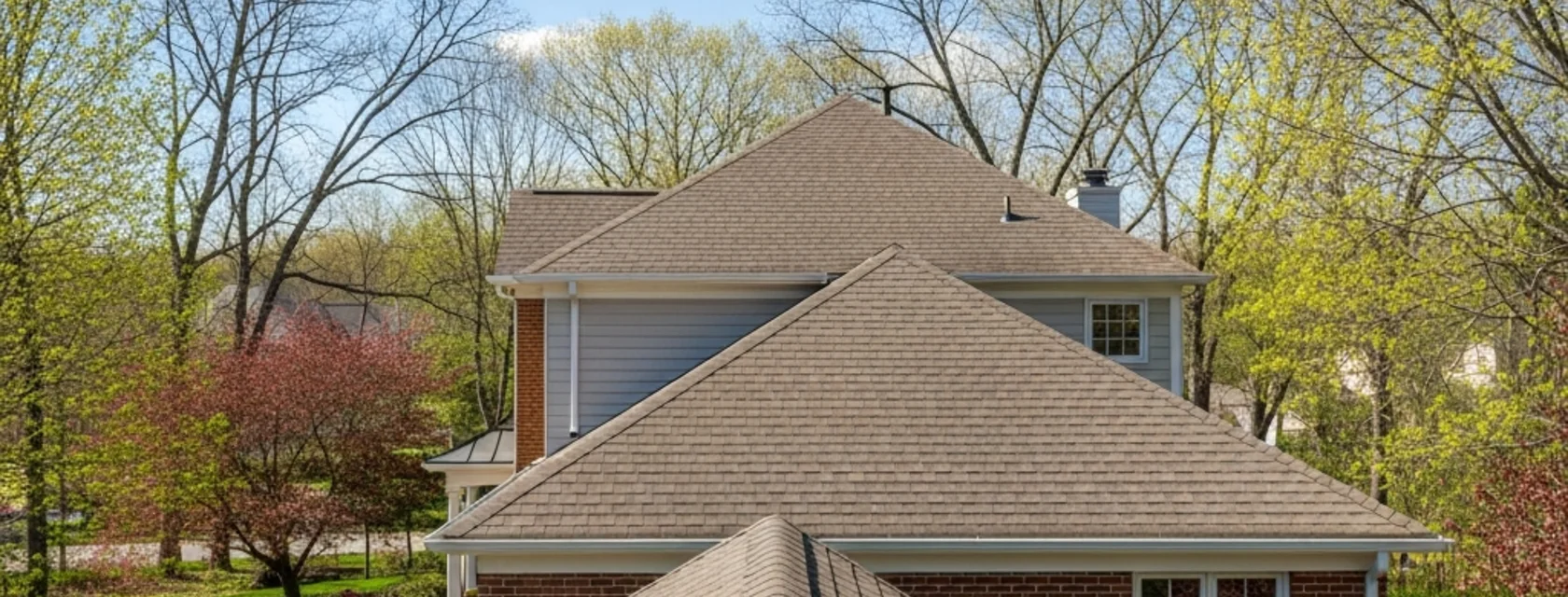
Look from the ground and the attic, not from the shingles
NRCA says most roofing work should not be done by the homeowner, and that any maintenance "should be confined to inspecting your roof during the fall and spring" and cleaning gutters. If you must use a ladder, NRCA asks for a firmly braced or tied-off ladder with rubber safety feet and rubber-soled shoes, staying on the ladder and off the roof if possible.
ARMA describes the usual rhythm: "an inspection is done in the spring so that repairs can be made during the warmer months, and then another inspection is performed in the fall prior to severe winter weather." That is why this list is a spring list: it is the first half of a two-visit year.
The checklist
Four lists, about ten minutes each
Tick items as you go. Write down the side of the house for anything you mark, because that detail is what a roofer or an insurer will ask first.
List 1: from the yard
- Cracked, warped or missing shinglesNRCA names these first among the things a twice-a-year look can find. Binoculars help from the lawn.
- Curling or lifted edgesNRCA's fall and spring check is "for cracked or curling shingles". Note which slope shows them.
- The roof edges and cornersNRCA: "Most wind damage begins on the edges of roof systems." Look along the eaves, rakes and ridge first.
- Flashing at chimney, walls and vent pipesNRCA lists "deteriorated flashings" and loose seams as findable signs. Look for gaps, lifted metal or a cracked seal.
- Debris that blew onto the roofNRCA's wind guidance says to check what blew onto or across the roof, not only the roofing itself.
- Branches touching or hanging over the roofARMA lists keeping trees trimmed and branches and debris off the roof surface as routine maintenance.
List 2: gutters and downspouts
- Leaves and debris in the guttersBoth NRCA and ARMA name gutter cleaning as the maintenance a homeowner can do.
- Loose granules at the downspout outletNRCA lists "excessive surface granules accumulating in the gutters or downspouts". IBHS describes granules as coated rocks that protect the shingle's fiberglass from UV rays.
- Clogged drains and downspoutsNRCA notes windblown debris tends to collect and clog them, which causes problems later if it is not removed.
- Gutters that sag or sit above the slope lineARMA's ice dam bulletin says the outer edge of the gutters should be lower than the roof's slope line so snow and ice can slide clear.
List 3: attic and ceilings
- Cracked paint or discolored ceiling boardNRCA's indoor signs of damaged roof areas: cracked paint, discolored plasterboard, peeling wallpaper.
- Eave vents and baffles not blockedARMA: ventilate the attic and install baffles near the eaves so air can move without obstruction.
- Insulation that still separates attic from houseARMA says keeping the attic cold by insulating it from the warm interior reduces snow melt, the start of ice dams.
- Marks from the last freeze and thawARMA: ice dams form from repeated thawing and freezing, and water forced under roofing can damage ceilings, walls and insulation. Stains along an exterior wall after winter are worth photographing.
List 4: paperwork and records
- Shingle color name and install yearARMA says both help a contractor match shingles, and leftover shingles saved from the original install match best.
- Whether the repair needs a permitAsk your local permit office before work starts. Fairfax County's wording is printed below.
- Any association or zoning ruleARMA advises checking with the local building and zoning department and the homeowner's association before treating shingles.
- Dated photosTake photos of anything you marked, with the date and the side of the house, so a spring record exists to compare with the fall visit.
You marked something: what could it be and who answers?
These readings come from the sources named in each card. None of them replaces a look by a roofing professional.
Dark brown or black streaks
- What you see
- Streaks or patches, most visible on light-colored shingles.
- What it can mean
- ARMA says algae discoloration is usually brown to black and can be mistaken for fungus, soot, moss or tree droppings. Moss and droppings typically leave only localized marks.
- Who to ask
- The shingle manufacturer, for moss. ARMA encourages professionals for any cleaning.
A missing or punctured shingle
- What you see
- A gap, or a hole after a branch or debris hit.
- What it can mean
- ARMA lists replacing punctured shingles and resealing wind-damaged ones among repairs that can be done relatively quickly. Roofing cement is described as a temporary fix only.
- Who to ask
- A roofing professional. Catch water with a bucket in the meantime.
Ceiling stain after rain
- What you see
- Discolored board, cracked or peeling paint below the roof.
- What it can mean
- NRCA lists these as indoor signs of damaged roof areas. The source does not say where the entry point is, and neither can a photo.
- Who to ask
- A roofing professional, and your insurer if storm damage is possible. See our insurance claim guide.
When a spring repair meets a permit counter
One county's wording, read on October 16, 2026. Other counties and cities keep their own pages, so check yours.
A permit IS required for: "Miscellaneous work (both interior and exterior)": "chimney repairs, foundation repairs, waterproofing, roof repairs, etc."
A permit is NOT required for: "Replacement of roof shingles"; "Replacement of less than 256 square feet (9 boards) of roof plywood (unless required to be fire rated, such as townhomes)"; "Gutters".
Fairfax County Land Development Services, "When is a permit required?" (residential lists), checked October 16, 2026.
Spring jobs the sources tell you to leave alone
Pressure wash or scrub the streaks off.
"DO NOT use a power washer or any type of brush or broom." Scrubbing can loosen granules, and a bleach rinse only lightens the color for a time.
Roll a coating or rejuvenator over old shingles.
It "strongly advises against the field application of any type of coatings or rejuvenators over installed asphalt shingles," and says to check the manufacturer and local rules first.
Chip off leftover ice or rake snow from the eaves.
Do not try to remove ice dams or shovel snow from the roof; the covering, flashings and gutters can be damaged. Call a professional if it is urgent.
Smear mastic over a spot to stop a drip.
Except in extreme situations, do not attempt repairs: spreading mastic or puncturing a blister covers evidence a roofing contractor needs.
Where each finding leads next
- Isolated shingle, flashing or fastener problems: roof repair, and the maintenance section of that page.
- Findings spread over several slopes: roof replacement and our materials overview.
- A low-slope or flat section over a porch or addition: flat roof guide.
- Ice dam history this past winter: our ice dam article.
- Not sure which office covers your address: service areas and the Fairfax page.
Spring roof questions, answered from the sources
How many times a year should a roof be looked at?
NRCA refers to biannual inspections and ARMA describes one in spring and another in fall before severe winter weather. Do your own ground-level look in both seasons.
Can I climb up and check the shingles myself?
NRCA says most roofing work should not be done yourself and advises staying on a braced ladder and off the roof if possible. Binoculars, the gutters and the attic cover most of this list.
Why do granules in the gutter matter?
IBHS describes granules as the coated rock that shields the fiberglass from UV rays. NRCA lists "excessive surface granules" in gutters or downspouts as a visible sign worth having looked at; the sources do not give a number for how many is too many.
Are black streaks on my roof a leak?
ARMA describes algae discoloration as brown to black streaks or patches that can be mistaken for fungus, soot, moss or tree droppings. It is a surface issue in that bulletin, not a leak report, so check the attic and ceilings separately.
What should I do if water is already coming in?
ARMA says to minimize interior water damage first with buckets, or a tarp on the damaged exterior area, and that roofing cement is only a temporary repair. Then have a roofing professional look at it.
Is a spring roof repair on the Fairfax County permit list?
The county's list names "roof repairs" as needing a permit and "replacement of roof shingles" as not needing one. Ask Land Development Services which applies to your job.
Will a spot repair match the rest of the roof?
ARMA says new shingles may look different at first because they have not aged like the old ones, and the difference tends to fade over time. Leftover shingles, the color name and the install year help the match.
Sources behind each list item, opened October 16, 2026
- NRCA, Roofing Guidelines resources and maintenance FAQ
- NRCA, Roof Repair After a Snowstorm (PDF)
- NRCA, Roof Repair After Strong Winds (PDF)
- ARMA, Asphalt Shingle Roofs are Repairable
- ARMA, Algae Discoloration of Roofs
- ARMA, Coatings or Rejuvenators on Asphalt Shingles
- ARMA, Protecting Against Damage From Ice Dams
- IBHS, Roof 101
- Fairfax County Land Development Services, when a permit is required
Talk through the next step
Found something on the list?
Tell us what you saw from the yard, the attic or the ceiling and which side of the house it was on. We will talk it through on the phone and tell you which of the pages here fits.
9220 Topaz St, Fairfax, VA 22031
Mon to Fri 7 AM to 8:30 PM, Sat 7 AM to 8 PM, closed Sunday